Say WOW

Suborbital space tourism finally arrives | FCC prepares to run public C-band auction | The big four in the U.S. launch industry — United Launch Alliance, SpaceX, Blue Origin and Northrop Grumman — hope to be one of two providers that will receive five-year contracts later this year to launch national security payloads starting in 2022. | China’s launch rate stays high | The International Space Station is the largest ever crewed object in space.

 
Angela Belcher delivers 2023 Dresselhaus Lecture on...
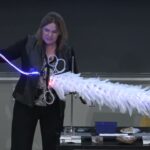
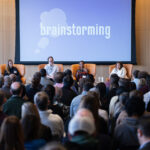
“How do we get to making nanomaterials that haven’t been evolved before?” asked Angela Belcher at the 2023 Mildred S. Dresselhaus Lecture at MIT on Nov. 20. “We can use elements that biology has already given us.” The combined in-person and virtual audience of over 300 was treated to a light-up, 3D model of M13 bacteriophage, a virus that only infects bacteria, complete with a pull-out strand of DNA. Belcher used the feather-boa-like model to show how her research...


Read More

Satellite-based method measures carbon in peat bogs
Peat bogs in the tropics store vast amounts of carbon, but logging, plantations, road building, and other activities have destroyed large swaths of these ecosystems in places like Indonesia and Malaysia. Peat formations are essentially permanently flooded forestland, where dead leaves and branches accumulate because the water table prevents their decomposition. The pileup of organic material gives these formations a distinctive domed shape, somewhat raised in the center and tapering toward the edges. Determining how much carbon is contained...

Read More

Closing the design-to-manufacturing gap for optical devices
Photolithography involves manipulating light to precisely etch features onto a surface, and is commonly used to fabricate computer chips and optical devices like lenses. But tiny deviations during the manufacturing process often cause these devices to fall short of their designers’ intentions. To help close this design-to-manufacturing gap, researchers from MIT and the Chinese University of Hong Kong used machine learning to build a digital simulator that mimics a specific photolithography manufacturing process. Their technique utilizes real data gathered...

Read More

 
Ronald Garcia Ruiz named a Popular Science...
Popular Science magazine has named Ronald Fernando Garcia Ruiz, assistant professor with MIT’s Department of Physics and a researcher in the Laboratory for Nuclear Science, as one of its Brilliant 10 for 2023. Garcia Ruiz is featured in the Dec. 5 issue. The Garcia Ruiz Lab (the Laboratory for Exotic Molecules and Atoms) focuses its research on the development of laser spectroscopy techniques to investigate the properties of subatomic particles using atoms and molecules made up of short-lived radioactive...

Read More

MIT campus goals in food, water, waste...
With the launch of Fast Forward: MIT’s Climate Action Plan for the Decade, the Institute committed to decarbonize campus operations by 2050 — an effort that touches on every corner of MIT, from building energy use to procurement and waste. At the operational level, the plan called for establishing a set of quantitative climate impact goals in the areas of food, water, and waste to inform the campus decarbonization roadmap. After an 18-month process that engaged staff, faculty, and...

Read More

Boosting faith in the authenticity of open...
Open source software — software that is freely distributed, along with its source code, so that copies, additions, or modifications can be readily made — is “everywhere,” to quote the 2023 Open Source Security and Risk Analysis Report. Ninety-six percent of the computer programs used by major industries include open source software, and 76 percent of those programs consist of open source software. But the percentage of software packages “containing security vulnerabilities remains troublingly high,” the report warned. One...

Read More

 
MIT Generative AI Week fosters dialogue across...
In late November, faculty, staff, and students from across MIT participated in MIT Generative AI Week. The programming included a flagship full-day symposium as well as four subject-specific symposia, all aimed at fostering a dialogue about the opportunities and potential applications of generative artificial intelligence technologies across a diverse range of disciplines. “These events are one expression of our conviction that MIT has a special responsibility to help society come to grips with the tectonic forces of generative AI —...

Read More

Moungi Bawendi honored during Nobel Week in...
The 2023 Nobel Prize winners received their awards in a grand ceremony yesterday in Stockholm, Sweden. Among those honored was MIT Professor Moungi Bawendi, who shared the 2023 Nobel Prize in Chemistry with Louis Brus and Aleksey Yekimov for their work on quantum dots. As part of the annual Nobel Week festivities, Bawendi gave a lecture about his research, participated in a Nobel Banquet, and took part in a conversation with Danish European Space Agency astronaut Andreas Mogensen, a...

Read More

Two from MIT named 2024 Marshall Scholars
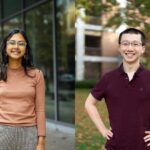
Anushree Chaudhuri and Rupert Li have won Marshall Scholarships, a prestigious British government-funded fellowship that offers exceptional American students the opportunity to pursue several years of graduate study in any field at any university in the United Kingdom. Up to 50 scholarships are awarded each year by the Marshall Aid Commemoration Commission. The students were advised and supported by the distinguished fellowships team, led by Associate Dean Kim Benard in Career Advising and Professional Development. They also received mentorship...

Read More

 
Scientists 3D print self-heating microfluidic devices
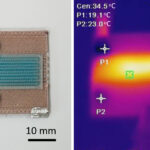
MIT researchers have used 3D printing to produce self-heating microfluidic devices, demonstrating a technique which could someday be used to rapidly create cheap, yet accurate, tools to detect a host of diseases. Microfluidics, miniaturized machines that manipulate fluids and facilitate chemical reactions, can be used to detect disease in tiny samples of blood or fluids. At-home test kits for Covid-19, for example, incorporate a simple type of microfluidic. But many microfluidic applications require chemical reactions that must be performed...

Read More

MIT group releases white papers on governance...
Providing a resource for U.S. policymakers, a committee of MIT leaders and scholars has released a set of policy briefs that outlines a framework for the governance of artificial intelligence. The approach includes extending current regulatory and liability approaches in pursuit of a practical way to oversee AI. The aim of the papers is to help enhance U.S. leadership in the area of artificial intelligence broadly, while limiting harm that could result from the new technologies and encouraging exploration...

Read More

Breakerspace illuminates the mysteries of materials
Days before the opening of the Breakerspace, a new laboratory and lounge at MIT, actor and rapper Jaden Smith tried out the facility’s capabilities, putting his bracelet under a digital optical microscope. On the screen in front of him was a 3D rendering of woven threads, each strand made up of smaller strands, with specks of matter dotting the surface. “His eyes just lit up,” says Professor Jeffrey Grossman, the Morton and Claire Goulder and Family Professor in Environmental...

Read More

 
Miranda McClellan ’18, MEng ’19 awarded 2025...
MIT alumna Miranda McClellan ’18, MEng ’19 has been named a 2025 Schwarzman Scholar. In August 2024, she will join the program’s 150 scholars arriving from 43 countries and 114 universities from around the world. The Class of 2025 Scholars were selected from a pool of over 4,000 applicants. They will attend a one-year fully funded master’s degree program in global affairs at Schwarzman College, Tsinghua University in Beijing, China. McClellan and her fellow Schwarzman Scholars will engage in...

Read More

MIT engineers design a robotic replica of...
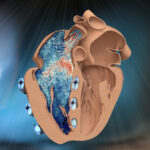
MIT engineers have developed a robotic replica of the heart’s right ventricle, which mimics the beating and blood-pumping action of live hearts. The robo-ventricle combines real heart tissue with synthetic, balloon-like artificial muscles that enable scientists to control the ventricle’s contractions while observing how its natural valves and other intricate structures function. The artificial ventricle can be tuned to mimic healthy and diseased states. The team manipulated the model to simulate conditions of right ventricular dysfunction, including pulmonary hypertension...

Read More

From MIT to Singapore and back: Delivering...
Both sections of MIT class 15.433 (Financial Markets), taught this fall by visiting associate professor of finance Hong Ru MFin ’10, PhD ’15 at the MIT Sloan School of Management, include over 100 students from the master of finance program. However, when he joined the program’s inaugural class just over a decade ago, this number was much smaller. “I started in the program in 2009 and graduated in 2010, and there were only 26 students then. Not like today,”...

Read More