Say WOW

Suborbital space tourism finally arrives | FCC prepares to run public C-band auction | The big four in the U.S. launch industry — United Launch Alliance, SpaceX, Blue Origin and Northrop Grumman — hope to be one of two providers that will receive five-year contracts later this year to launch national security payloads starting in 2022. | China’s launch rate stays high | The International Space Station is the largest ever crewed object in space.

 
From refugee to MIT graduate student

Mlen-Too Wesley has faded memories of his early childhood in Liberia, but the sharpest one has shaped his life. Wesley was 4 years old when he and his family boarded a military airplane to flee the West African nation. At the time, the country was embroiled in a 14-year civil war that killed approximately 200,000 people, displaced about 750,000, and starved countless more. When Wesley’s grandmother told him he would enjoy a meal during his flight, Wesley knew his fortune had changed....

Read More

Q&A: Transforming research through global collaborations
The MIT Global Seed Funds (GSF) program fosters global research collaborations with MIT faculty and their peers abroad — creating partnerships that tackle complex global issues, from climate change to health-care challenges and beyond. Administered by the MIT Center for International Studies (CIS), the GSF program has awarded more than $26 million to over 1,200 faculty research projects since its inception in 2008. Through its unique funding structure — comprising a general fund for unrestricted geographical use and several specific funds...

Read More

Photonic processor could enable ultrafast AI computations...
The deep neural network models that power today’s most demanding machine-learning applications have grown so large and complex that they are pushing the limits of traditional electronic computing hardware. Photonic hardware, which can perform machine-learning computations with light, offers a faster and more energy-efficient alternative. However, there are some types of neural network computations that a photonic device can’t perform, requiring the use of off-chip electronics or other techniques that hamper speed and efficiency. Building on a decade of...

Read More

 
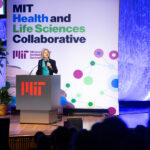
MIT to launch Health and Life Sciences...
To address some of society’s most pressing health challenges, MIT President Sally Kornbluth is launching the MIT Health and Life Sciences Collaborative, a new effort aimed at harnessing the collective power of researchers from fields such as engineering, science, AI, economics, business, policy, design, and the humanities to develop high-impact health solutions. By catalyzing collaborations in fields like immunology, neuroscience, AI, sustainability and healthcare – and building new bridges with Boston’s hospitals and with industry leaders in biotech and...

Read More

Creating innovative health solutions for individuals and...
The factors impacting successful patient care are many and varied. Early diagnosis, proper adherence to prescription medication schedules, and effective monitoring and management of chronic disease, for example, all contribute to better outcomes. However, each of these factors can be hindered by outside influences — medication doesn’t work as well if it isn’t taken as prescribed, and disease can be missed or misdiagnosed in early stages if symptoms are mild or not present. Giovanni Traverso, the Karl Van Tassel...

Read More

MIT’s Science Policy Initiative holds 14th annual...
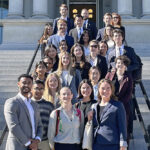
From Oct. 21 to 22, a delegation of 21 MIT students and one postdoc met in Washington for the 14th Executive Visit Days (ExVD). Organized by the MIT Science Policy Initiative (SPI) and the MIT Washington Office, ExVD enables students to engage with officials and scientists from federal agencies. Students are given a platform to form connections in the capital while learning about the many facets of science policy work and careers. In two days, the delegation visited eight different...

Read More

 
Troy Van Voorhis to step down as...
Troy Van Voorhis, the Robert T. Haslam and Bradley Dewey Professor of Chemistry, will step down as department head of the Department of Chemistry at the end of this academic year. Van Voorhis has served as department head since 2019, previously serving the department as associate department head since 2015. “Troy has been an invaluable partner and sounding board who could always be counted on for a wonderful mix of wisdom and pragmatism,” says Nergis Mavalvala, the Kathleen and...

Read More

Is there enough land on Earth to...
Capping global warming at 1.5 degrees Celsius is a tall order. Achieving that goal will not only require a massive reduction in greenhouse gas emissions from human activities, but also a substantial reallocation of land to support that effort and sustain the biosphere, including humans. More land will be needed to accommodate a growing demand for bioenergy and nature-based carbon sequestration while ensuring sufficient acreage for food production and ecological sustainability. The expanding role of land in a 1.5...

Read More

Decarbonizing heavy industry with thermal batteries
Whether you’re manufacturing cement, steel, chemicals, or paper, you need a large amount of heat. Almost without exception, manufacturers around the world create that heat by burning fossil fuels. In an effort to clean up the industrial sector, some startups are changing manufacturing processes for specific materials. Some are even changing the materials themselves. Daniel Stack SM ’17, PhD ’21 is trying to address industrial emissions across the board by replacing the heat source. Since coming to MIT in...

Read More

 
The MIT Press releases report on the...
The MIT Press has released a comprehensive report that addresses how open access policies shape research and what is needed to maximize their positive impact on the research ecosystem. The report, entitled “Access to Science and Scholarship 2024: Building an Evidence Base to Support the Future of Open Research Policy,” is the outcome of a National Science Foundation-funded workshop held at the Washington headquarters of the American Association for the Advancement of Science on Sept. 20. While open access...

Read More

A blueprint for better cancer immunotherapies
Immune checkpoint blockade (ICB) therapies can be very effective against some cancers by helping the immune system recognize cancer cells that are masquerading as healthy cells.  T cells are built to recognize specific pathogens or cancer cells, which they identify from the short fragments of proteins presented on their surface. These fragments are often referred to as antigens. Healthy cells will will not have the same short fragments or antigens on their surface, and thus will be spared from...

Read More

Improving health, one machine learning system at...
Captivated as a child by video games and puzzles, Marzyeh Ghassemi was also fascinated at an early age in health. Luckily, she found a path where she could combine the two interests.  “Although I had considered a career in health care, the pull of computer science and engineering was stronger,” says Ghassemi, an associate professor in MIT’s Department of Electrical Engineering and Computer Science and the Institute for Medical Engineering and Science (IMES) and principal investigator at the Laboratory for...

Read More

 
Professor Emeritus James Harris, a scholar of...
James Wesley “Jim” Harris PhD ’67, professor emeritus of Spanish and linguistics, passed away on Nov. 10. He was 92. Harris attended the University of Georgia, the Instituto Tecnológico de Estudios Superiores de Monterrey, and the Universidad Nacional Autónoma de México. He later earned a master’s degree in linguistics from Louisiana State University and a PhD in linguistics from MIT. Harris joined the MIT faculty as an assistant professor in 1967, where he remained until his retirement in 1996....

Read More

New solar projects will grow renewable energy...
In the latest step to implement commitments made in MIT’s Fast Forward climate action plan, staff from the Department of Facilities; Office of Sustainability; and Environment, Health and Safety Office are advancing new solar panel installations this fall and winter on four major campus buildings: The Stratton Student Center (W20), the Dewey Library building (E53), and two newer buildings, New Vassar (W46) and the Theater Arts building (W97). These four new installations, in addition to existing rooftop solar installations...

Read More

New AI tool generates realistic satellite images...
Visualizing the potential impacts of a hurricane on people’s homes before it hits can help residents prepare and decide whether to evacuate. MIT scientists have developed a method that generates satellite imagery from the future to depict how a region would look after a potential flooding event. The method combines a generative artificial intelligence model with a physics-based flood model to create realistic, birds-eye-view images of a region, showing where flooding is likely to occur given the strength of...

Read More