
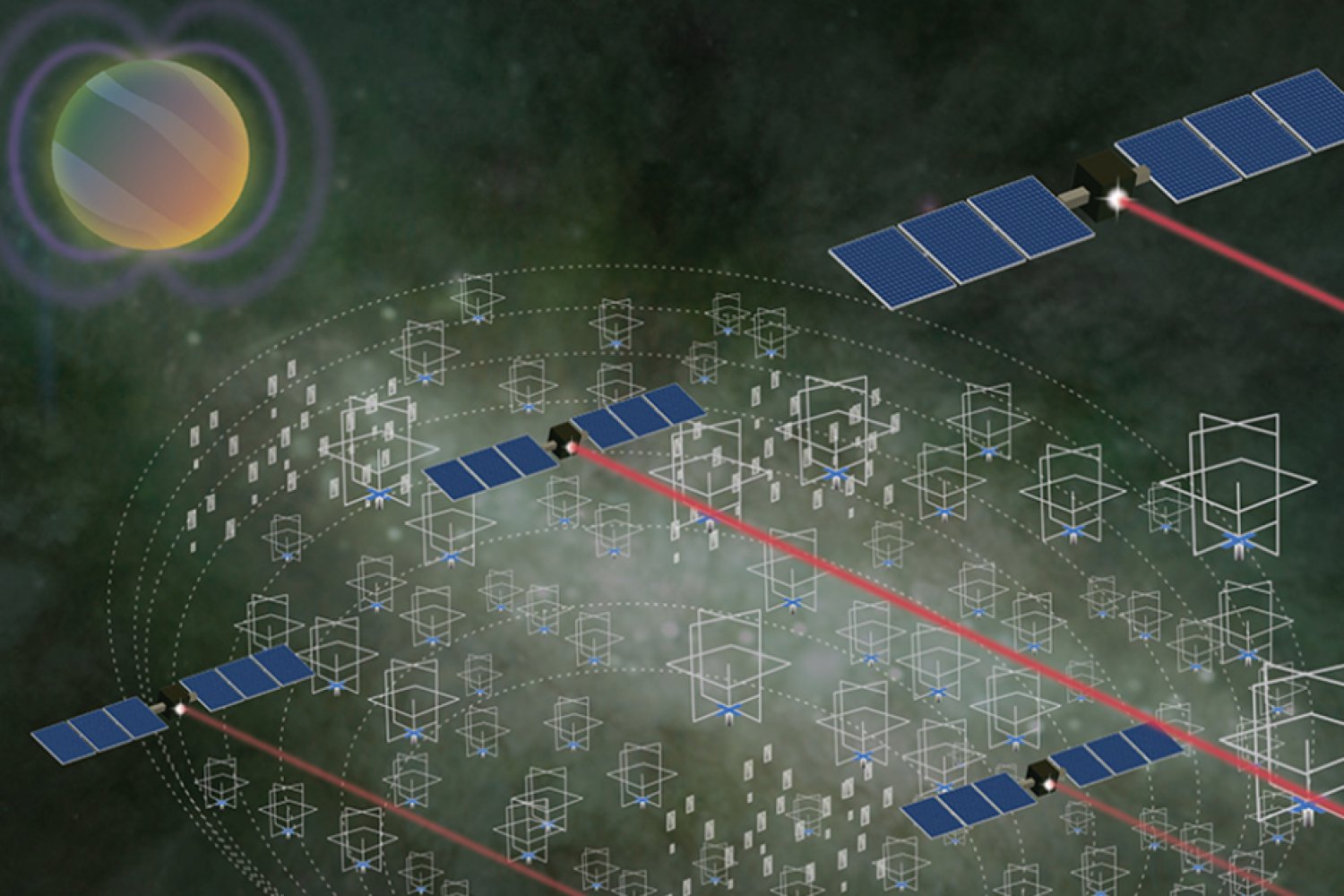
For centuries, humans have sought to study the stars and celestial bodies, whether through observations made by naked eye or by telescopes on the ground and in space that can view the universe across nearly the entire electromagnetic spectrum. Each view unlocks new information about the denizens of space — X-ray pulsars, gamma-ray bursts — but one is still missing: the low-frequency radio sky.Researchers from MIT Lincoln Laboratory, the MIT Haystack Observatory, and Lowell Observatory are working on a NASA-funded concept study called the Great Observatory for Long Wavelengths, or GO-LoW, that…


