
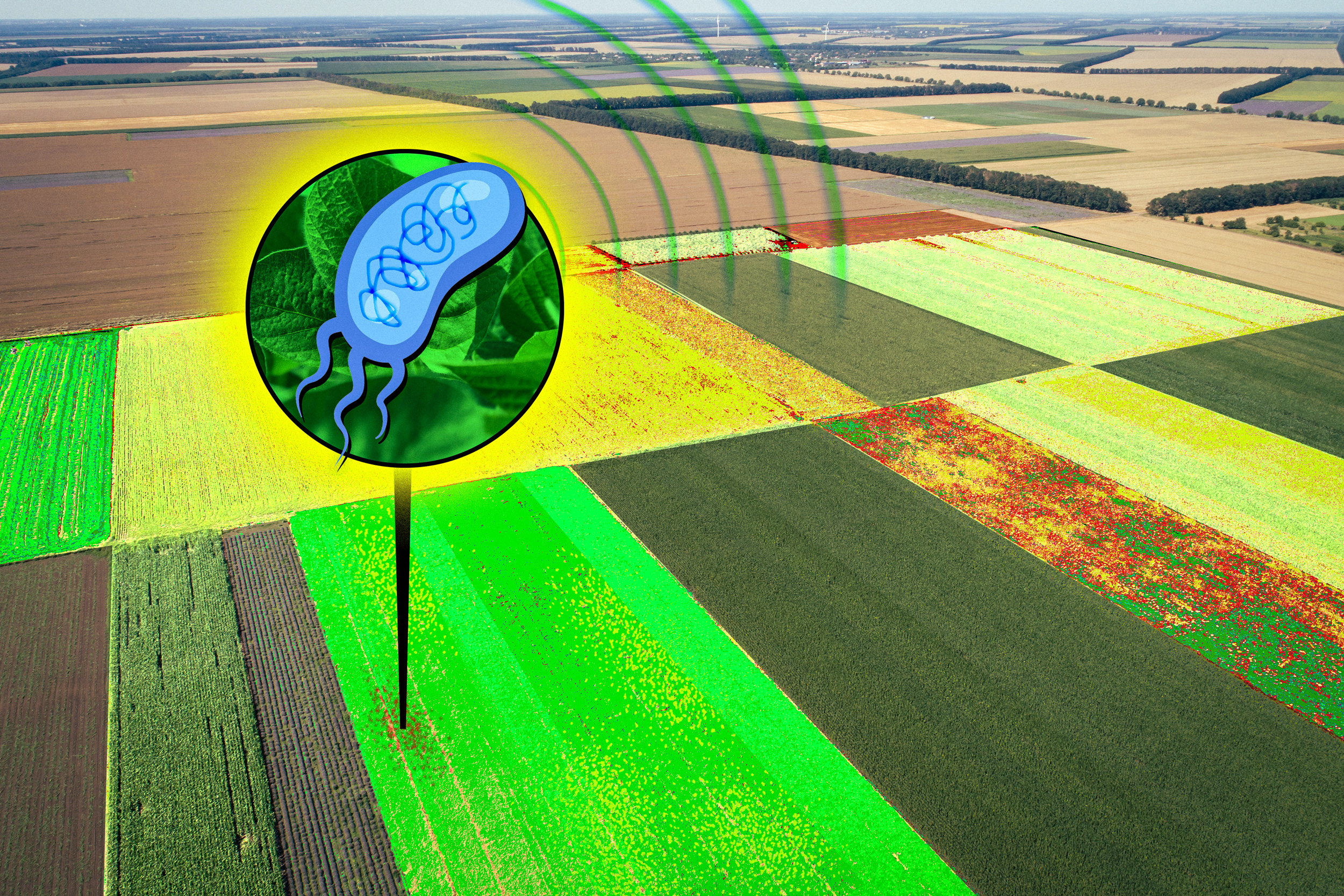
Bacteria can be engineered to sense a variety of molecules, such as pollutants or soil nutrients. In most cases, however, these signals can only be detected by looking at the cells under a microscope, making them impractical for large-scale use.Using a new method that triggers cells to produce molecules that generate unique combinations of color, MIT engineers have shown that they can read out these bacterial signals from as far as 90 meters away. Their work could lead to the development of bacterial sensors for agricultural and other applications, which…


