Say WOW

Suborbital space tourism finally arrives | FCC prepares to run public C-band auction | The big four in the U.S. launch industry — United Launch Alliance, SpaceX, Blue Origin and Northrop Grumman — hope to be one of two providers that will receive five-year contracts later this year to launch national security payloads starting in 2022. | China’s launch rate stays high | The International Space Station is the largest ever crewed object in space.

 
Embracing Kangiten of Torimi Shrine in Shiroi,...

Kangiten is a strange deity. The Japanese Buddhist equivalent of Hindu god Ganesha, he also takes the form of an elephant-headed deity, but in twofold, in an act of embrace. Traditionally, the deity is feared and respected as a remover of obstacles and bringer of success. His effigy (if any), however, is always enshrined in the temple treasury never to be shown to worshippers. This is believed to be due to the sensual depiction of the embracing deities, and...


Read More

Saint Clement's Caves in Hastings, England
Saint Clement’s Caves is a four-and-a-half-acre network of ancient tunnels and caverns beneath Hastings‘ West Hill in its Old Town. The earliest written reference to the caves, from 1783, tells of an elderly man and woman who lived there after being evicted from Hastings’ workhouse. Discovered by authorities at the end of the 140-foot “Monk’s Walk,” the pair claimed that the caves went no deeper, despite the acres of hidden tunnels and caverns beyond. They may have been covering for...

Read More

Area 21 Cusco in Cusco, Peru
Area 51 might be barricaded by barbed wire and military guards, but this open-air exhibit welcomes all intrepid travelers. Signs that say Abducción Gratis (“Abduction Free”) and the looming figure of a crashed UFO greet visitors, encouraging guests to meet ET’s distant relatives. Situated atop a hill on the outskirts of Cusco along a winding path, visitors can pose with an assortment of extraterrestrials of all shapes, sizes, and home planets. However, this is more than a kitschy roadside...

Read More

 
The Tale of the Vanishing Summer Camp...
It was a muggy summer evening more than a decade ago in Apopka, Florida. Spanish moss hung like tattered capes on the gnarled oaks that loomed over cabins where, as day turned to night, tired campers made their way to their bunks. After a long day of archery, arts-and-crafts, and waterskiing, there was still one more activity for a willing audience: the nightly ghost story. The dim glow of a flashlight illuminated the faces of a dozen tween boys....

Read More

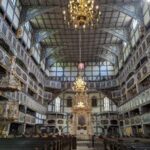
Jawor Peace Church in Jawor, Poland
The Jawor Peace Church may be smaller than its more famous sister church in Świdnica, but its interior is no less stunning, and its location further off the beaten track means that a visit here often feels more intimate. Prior to the two World Wars, the Thirty Years’ War between Catholics and Protestants (1618-1648) had been the deadliest conflict in modern European history, leaving large parts of Central Europe devastated and depopulated. As part of the Treaty of Westphalia in...

Read More

Whitchurch Silk Mill in Whitchurch, England
This 18th-century mill is home to one of the four remaining silk ribbon-weavers in the United Kingdom. These skilled craftspeople are officially an endangered species. Whitchurch ribbons are not your run-of-the-mill ribbons. Woven on looms dating back to the 1800s, they can be produced in any width, with satin stripes that shine when the ribbons are folded into bows. The real silk makes a satisfying scrunching sound—the technical term is “scroop.” For this reason, Whitchurch ribbons are the top choice for...

Read More

 
Fountain of the Unbelievers in Zaragoza,...
The Imperial Canal of Aragon is a civil engineering achievement of the highest order. Built in the 18th century, it aimed to provide irrigation water for lands to the southeast and above the level of the River Ebro, as well as a means of navigation linking Aragon to the sea. But some important citizens of Zaragoza did not support the building of the canal, due to the social changes it could bring about in the agrarian community. They openly...

Read More

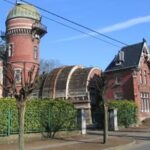
Cointe Observatory in Liège, Belgium
Observatories often have an otherworldly feel, not just because of the telescopes housed inside, but due to the sometimes-unusual style in which they are built. Cointe Observatory is no exception, with its iconic red bricks and retractable roof that may have inspired Futurama’s Planet Express building.  The observatory consists of a snaking collection of buildings, the oldest of which dates back to 1881, with the newest additions as recent as the 1980s. Most of the structure is built in...

Read More

Curtis Mill Park in Newark, Delaware
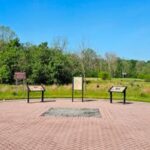
If you’re going to write the history of a place, you’ll need a lot of paper. And for a time, there was no finer paper to be had than from the Curtis Paper Mill in Newark, Delaware. Today, a neighborhood park attracts birds and the occasional visitor to what was once the site of the oldest operational paper mill in America. Although the site is now known as Curtis Mill Park, it predates the Curtises entirely. The mill’s history...

Read More

 
Crkva Sv. Martina (St. Martin's Church) in...
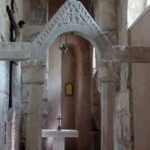
Most of what is now Split’s historic center was once the palace of Roman emperor Diocletian, surrounded by thick stone walls. What is now the Church of St. Martin was then a passageway for the walls’ guards. His rule lasted from 284 to 305, and was partly known for the Diocleniatic Persecution, an official and bloody attempt to remove Christianity from the Empire (before Emperor Constantine made it the preferred religion in 324, a little over a decade after...

Read More

The Anxious History of the American Summer...
In the summer of 1861, weeks after Confederate troops fired the first shots of the Civil War, educator and abolitionist Frederick Gunn assembled his own troops—about 30 boys and a dozen girls who were students at his Washington, Connecticut, boarding school. Gunn, an early proponent of outdoor education, had led students on camping trips before, but this time he had something a little more regimented in mind. Like the gathering Union forces, they would march—42 miles to be exact—to...

Read More

How to Read Wildlife Tracks and Signs
Happening upon a foraging deer or dam-building beaver can turn an ordinary walk in the woods into your own personal safari. But you don’t have to wait for a chance encounter to get up close and personal with wildlife. Finding clues left behind by animals was an essential skill for ancient humans and remains a free and fun way to connect with nature today. “All of a sudden the world begins to open up,” says Casey McFarland, a field...

Read More

 
Denkiya Hall in Tokyo, Japan
Founded in 1903 as an electronics store in Tokyo’s Asakusa neighborhood, Denkiya Hall transformed itself into a café after its skilled workers went away to fight in the Russo-Japanese War (1904-1905). Back then, electricity (or, in Japanese, denki) was considered a trendy thing. Asakusa’s famous liquor, Denki Bran (electric brandy), invented in 1882 at Kamiya Bar, attests to that. As it turned out, Denkiya Hall was more successful as a café with a quirky name than as a dime-a-dozen electronics store....

Read More

Garden of the Phoenix in Chicago, Illinois
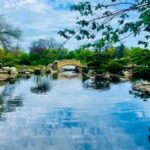
A fabulous respite for nature lovers and an excellent spot for birders, the Garden of the Phoenix, originally a gift from Chicago’s sister city of Osaka, Japan, to coincide with the World’s Columbian Exposition of 1893, which was centered around Jackson Park and what is now the Museum of Science and Industry. (The Palace of Fine Arts of the Exposition remains as part of today’s museum.)  The Garden of the Phoenix is a peaceful, quiet, lovely spot tucked away in...

Read More

Soul City in Norlina, North Carolina
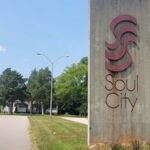
Soul City is not a city, but it aspired to be. Planned as part of a federal program supporting the development of “new towns,” master planned communities, Soul City was intended as a rural alternative to inner cities where Black Americans could realize economic and political self-determination. As envisioned in 1969, the community would have 50,000 residents and produce 24,000 jobs by the year 2000. Like all utopias, the reality fell short of the dream, but the dream gave...

Read More