Say WOW

Suborbital space tourism finally arrives | FCC prepares to run public C-band auction | The big four in the U.S. launch industry — United Launch Alliance, SpaceX, Blue Origin and Northrop Grumman — hope to be one of two providers that will receive five-year contracts later this year to launch national security payloads starting in 2022. | China’s launch rate stays high | The International Space Station is the largest ever crewed object in space.

 
Mind, hand, and harvest

On a sunny, warm Sunday MIT students, staff, and faculty spread out across the fields of Hannan Healthy Foods in Lincoln, Massachusetts. Some of these volunteers pluck tomatoes from their vines in a patch a few hundred feet from the cars whizzing by on Route 117. Others squat in the shade cast by the greenhouse to snip chives. Still others slice heads of Napa cabbage from their roots in a bed nearer the woods. Everything being harvested today will wind...


Read More

Unlocking ammonia as a fuel source for...
At a high level, ammonia seems like a dream fuel: It’s carbon-free, energy-dense, and easier to move and store than hydrogen. Ammonia is also already manufactured and transported at scale, meaning it could transform energy systems using existing infrastructure. But burning ammonia creates dangerous nitrous oxides, and splitting ammonia molecules to create hydrogen fuel typically requires lots of energy and specialized engines. The startup Amogy, founded by four MIT alumni, believes it has the technology to finally unlock ammonia...

Read More

How artificial intelligence can help achieve a...
There is growing attention on the links between artificial intelligence and increased energy demands. But while the power-hungry data centers being built to support AI could potentially stress electricity grids, increase customer prices and service interruptions, and generally slow the transition to clean energy, the use of artificial intelligence can also help the energy transition. For example, use of AI is reducing energy consumption and associated emissions in buildings, transportation, and industrial processes. In addition, AI is helping to...

Read More

 
Who’s Ready to Think About Blocking Out...
For years, the idea of geoengineering—artificially lowering global temperatures through technological means—has been met with skepticism. Only a handful of dedicated and much-criticized scientists have argued for researching it at all, and when others weighed in, it was generally to trash the idea. This September, in a study published in the journal Frontiers in Science, more than 40 experts in climate change, polar geosciences, and ocean patterns warned that geoengineering was extremely unlikely to work and likely to have...

Read More

Faces of MIT: Brian Hanna
Brian Hanna, operations manager of MIT Venture Mentoring Service (VMS), connects skilled volunteer mentors with MIT entrepreneurs looking to launch, expand, and enhance their vision.   MIT VMS is a free service, supporting innovation across the Institute, available to all current MIT students, staff members, faculty members, or alums of a degree-granting program living in the Greater Boston area. If a community member has an idea that they’d like help developing, Hanna and his team will match them with a...

Read More

 
How a building creates and defines a...
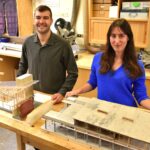
As an undergraduate majoring in architecture, Dong Nyung Lee ’21 wasn’t sure how to respond when friends asked him what the study of architecture was about. “I was always confused about how to describe it myself,” he says with a laugh. “I would tell them that it wasn’t just about a building, or a city, or a community. It’s a balance across different scales, and it has to touch everything all at once.” As a graduate student enrolled in...

Read More

Symposium examines the neural circuits that keep...
Taking an audience of hundreds on a tour around the body, seven speakers at The Picower Institute for Learning and Memory’s symposium “Circuits of Survival and Homeostasis” Oct. 21 shared their advanced and novel research about some of the nervous system’s most evolutionarily ancient functions. Introducing the symposium that she arranged with a picture of a man at a campfire on a frigid day, Sara Prescott, assistant professor in the Picower Institute and MIT’s departments of Biology and Brain...

Read More

Quantum modeling for breakthroughs in materials science...
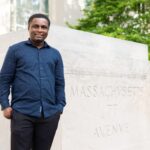
Ernest Opoku knew he wanted to become a scientist when he was a little boy. But his school in Dadease, a small town in Ghana, offered no elective science courses — so Opoku created one for himself. Even though they had neither a dedicated science classroom nor a lab, Opoku convinced his principal to bring in someone to teach him and five other friends he had convinced to join him. With just a chalkboard and some imagination, they learned...

Read More

 
A new take on carbon capture
If there was one thing Cameron Halliday SM ’19, MBA ’22, PhD ’22 was exceptional at during the early days of his PhD at MIT, it was producing the same graph over and over again. Unfortunately for Halliday, the graph measured various materials’ ability to absorb CO2 at high temperatures over time — and it always pointed down and to the right. That meant the materials lost their ability to capture the molecules responsible for warming our climate. At...

Read More

An improved way to detach cells from...
Anchorage-dependent cells are cells that require physical attachment to a solid surface, such as a culture dish, to survive, grow, and reproduce. In the biomedical industry, and others, having the ability to culture these cells is crucial, but current techniques used to separate cells from surfaces can induce stresses and reduce cell viability. “In the pharmaceutical and biotechnology industries, cells are typically detached from culture surfaces using enzymes — a process fraught with challenges,” says Kripa Varanasi, MIT professor of mechanical...

Read More

The science of consciousness
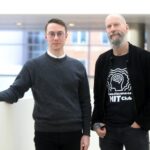
Humans know they exist, but how does “knowing” work? Despite all that’s been learned about brain function and the bodily processes it governs, we still don’t understand where the subjective experiences associated with brain functions originate.  A new interdisciplinary project seeks to find answers to these kinds of big questions around consciousness, a fundamental yet elusive phenomenon. The MIT Consciousness Club is co-led by philosopher Matthias Michel, the Old Dominion Career Development Professor in the Department of Linguistics and Philosophy, and Earl Miller, the...

Read More

 
MIT Energy Initiative conference spotlights research priorities...
“We’re here to talk about really substantive changes, and we want you to be a participant in that,” said Desirée Plata, the School of Engineering Distinguished Professor of Climate and Energy in MIT’s Department of Civil and Environmental Engineering, at Energizing@MIT: the MIT Energy Initiative’s (MITEI) Annual Research Conference that was held on Sept. 9-10. Plata’s words resonated with the 150-plus participants from academia, industry, and government meeting in Cambridge for the conference, whose theme was “tackling emerging energy...

Read More

Introducing the MIT-GE Vernova Climate and Energy...
MIT and GE Vernova launched the MIT-GE Vernova Energy and Climate Alliance on Sept. 15, a collaboration to advance research and education focused on accelerating the global energy transition. Through the alliance — an industry-academia initiative conceived by MIT Provost Anantha Chandrakasan and GE Vernova CEO Scott Strazik — GE Vernova has committed $50 million over five years in the form of sponsored research projects and philanthropic funding for research, graduate student fellowships, internships, and experiential learning, as well...

Read More

Small, inexpensive hydrophone boosts undersea signals
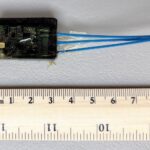
Researchers at MIT Lincoln Laboratory have developed a first-of-its-kind hydrophone built around a simple, commercially available microphone. The device, leveraging a common microfabrication process known as microelectromechanical systems (MEMS), is significantly smaller and less expensive than current hydrophones, yet has equal or exceeding sensitivity. The hydrophone could have applications for the U.S. Navy, as well as industry and the scientific research community. “Given the broad interest from the Navy in low-cost hydrophones, we were surprised that this design had...

Read More