Say WOW

Suborbital space tourism finally arrives | FCC prepares to run public C-band auction | The big four in the U.S. launch industry — United Launch Alliance, SpaceX, Blue Origin and Northrop Grumman — hope to be one of two providers that will receive five-year contracts later this year to launch national security payloads starting in 2022. | China’s launch rate stays high | The International Space Station is the largest ever crewed object in space.

 
Fiber computer allows apparel to run apps...
What if the clothes you wear could care for your health? MIT researchers have developed an autonomous programmable computer in the form of an elastic fiber, which could monitor health conditions and physical activity, alerting the wearer to potential health risks in real-time. Clothing containing the fiber computer was comfortable and machine washable, and the fibers were nearly imperceptible to the wearer, the researchers report. Unlike on-body monitoring systems known as “wearables,” which are located at a single point...
Read More

A protein from tiny tardigrades may help...
About 60 percent of all cancer patients in the United States receive radiation therapy as part of their treatment. However, this radiation can have severe side effects that often end up being too difficult for patients to tolerate. Drawing inspiration from a tiny organism that can withstand huge amounts of radiation, researchers at MIT, Brigham and Women’s Hospital, and the University of Iowa have developed a new strategy that may protect patients from this kind of damage. Their approach...

Read More

MIT engineers prepare to send three payloads...
Three MIT payloads will soon hitch a ride to the moon in a step toward establishing a permanent base on the lunar surface. In the coming days, weather permitting, MIT engineers and scientists will send three payloads into space, on a course set for the moon’s south polar region. Scientists believe this area, with its permanently shadowed regions, could host hidden reservoirs of frozen water, which could serve to sustain future lunar settlements and fuel missions beyond the moon....

Read More

 
Student Spotlight: Titus Roesler
The following is part of a series of short interviews from the Department of Electrical Engineering and Computer Science (EECS) featuring a student describing themselves and life at MIT. Today’s interviewee, Titus Roesler, is a senior majoring in electrical science and engineering. As a first-year at MIT, Roesler joined the Experimental Study Group (ESG), a learning community that offers new MIT students the general Institute requirements (GIRs) in a small, tight-knit class setting. Roesler stuck around as an associate advisor...

Read More

An “All-American” vision of service to others
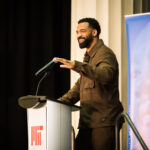
Spencer Paysinger has already been many things in his life, including a Super Bowl-winning linebacker, a writer and producer of the hit television series “All-American,” and local-business entrepreneur. But as he explained during his keynote speech at MIT’s 51st annual event celebrating the life and legacy of Martin Luther King Jr., Paysinger would prefer to think about his journey in additional terms: whether he has been able to serve others along the way. “As I stand up here today...

Read More

Two from MIT named 2025 Gates Cambridge...
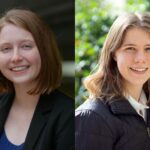
MIT senior Markey Freudenburg-Puricelli and recent alumna Abigail (“Abbie”) Schipper ’24 have been selected as Gates Cambridge Scholars and will begin graduate studies this fall in the field of their choice at Cambridge University in the U.K. Now celebrating its 25th year, the Gates Cambridge program provides fully funded post-graduate scholarships to outstanding applicants from countries outside of the U.K. The mission of Gates Cambridge is to build a global network of future leaders committed to changing the world...

Read More

 
High-speed videos show what happens when a...
Rain can freefall at speeds of up to 25 miles per hour. If the droplets land in a puddle or pond, they can form a crown-like splash that, with enough force, can dislodge any surface particles and launch them into the air. Now MIT scientists have taken high-speed videos of droplets splashing into a deep pool, to track how the fluid evolves, above and below the water line, frame by millisecond frame. Their work could help to predict how...

Read More

3 Questions: Exploring the limits of carbon...
As part of a multi-pronged approach toward curbing the effects of greenhouse gas emissions, scientists seek to better understand the impact of rising carbon dioxide (CO2) levels on terrestrial ecosystems, particularly tropical forests. To that end, climate scientist César Terrer, the Class of 1958 Career Development Assistant Professor of Civil and Environmental Engineering (CEE) at MIT, and colleague Josh Fisher of Chapman University are bringing their scientific minds to bear on a unique setting — an active volcano in Costa...

Read More

AI system predicts protein fragments that can...
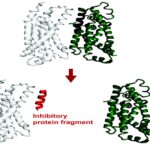
All biological function is dependent on how different proteins interact with each other. Protein-protein interactions facilitate everything from transcribing DNA and controlling cell division to higher-level functions in complex organisms. Much remains unclear, however, about how these functions are orchestrated on the molecular level, and how proteins interact with each other — either with other proteins or with copies of themselves. Recent findings have revealed that small protein fragments have a lot of functional potential. Even though they are...

Read More

 
MIT faculty, alumni named 2025 Sloan Research...
Seven MIT faculty and 21 additional MIT alumni are among 126 early-career researchers honored with 2025 Sloan Research Fellowships by the Alfred P. Sloan Foundation. The recipients represent the MIT departments of Biology; Chemical Engineering; Chemistry; Civil and Environmental Engineering; Earth, Atmospheric and Planetary Sciences; Economics; Electrical Engineering and Computer Science; Mathematics; and Physics as well as the Music and Theater Arts Section and the MIT Sloan School of Management. The fellowships honor exceptional researchers at U.S. and Canadian educational institutions, whose creativity, innovation, and...

Read More

Professor Anthony Sinskey, biologist, inventor, entrepreneur, and...
Longtime MIT Professor Anthony “Tony” Sinskey ScD ’67, who was also the co-founder and faculty director of the Center for Biomedical Innovation (CBI), passed away on Feb. 12 at his home in New Hampshire. He was 84. Deeply engaged with MIT, Sinskey left his mark on the Institute as much through the relationships he built as the research he conducted. Colleagues say that throughout his decades on the faculty, Sinskey’s door was always open. “He was incredibly generous in...

Read More

MIT biologists discover a new type of...
RNA splicing is a cellular process that is critical for gene expression. After genes are copied from DNA into messenger RNA, portions of the RNA that don’t code for proteins, called introns, are cut out and the coding portions are spliced back together. This process is controlled by a large protein-RNA complex called the spliceosome. MIT biologists have now discovered a new layer of regulation that helps to determine which sites on the messenger RNA molecule the spliceosome will...

Read More

 
Rooftop panels, EV chargers, and smart thermostats...
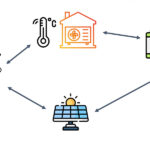
There’s a lot of untapped potential in our homes and vehicles that could be harnessed to reinforce local power grids and make them more resilient to unforeseen outages, a new study shows. In response to a cyber attack or natural disaster, a backup network of decentralized devices — such as residential solar panels, batteries, electric vehicles, heat pumps, and water heaters — could restore electricity or relieve stress on the grid, MIT engineers say. Such devices are “grid-edge” resources...

Read More

Chip-based system for terahertz waves could enable...
The use of terahertz waves, which have shorter wavelengths and higher frequencies than radio waves, could enable faster data transmission, more precise medical imaging, and higher-resolution radar. But effectively generating terahertz waves using a semiconductor chip, which is essential for incorporation into electronic devices, is notoriously difficult. Many current techniques can’t generate waves with enough radiating power for useful applications unless they utilize bulky and expensive silicon lenses. Higher radiating power allows terahertz signals to travel farther. Such lenses,...

Read More

Reducing carbon emissions from residential heating: A...
In the race to reduce climate-warming carbon emissions, the buildings sector is falling behind. While carbon dioxide (CO2) emissions in the U.S. electric power sector dropped by 34 percent between 2005 and 2021, emissions in the building sector declined by only 18 percent in that same time period. Moreover, in extremely cold locations, burning natural gas to heat houses can make up a substantial share of the emissions portfolio. Therefore, steps to electrify buildings in general, and residential heating...

Read More