Say WOW

Suborbital space tourism finally arrives | FCC prepares to run public C-band auction | The big four in the U.S. launch industry — United Launch Alliance, SpaceX, Blue Origin and Northrop Grumman — hope to be one of two providers that will receive five-year contracts later this year to launch national security payloads starting in 2022. | China’s launch rate stays high | The International Space Station is the largest ever crewed object in space.

 
Designing a new way to optimize complex...
Coordinating complicated interactive systems, whether it’s the different modes of transportation in a city or the various components that must work together to make an effective and efficient robot, is an increasingly important subject for software designers to tackle. Now, researchers at MIT have developed an entirely new way of approaching these complex problems, using simple diagrams as a tool to reveal better approaches to software optimization in deep-learning models. They say the new method makes addressing these complex tasks...


Read More

Luna: A moon on Earth
On March 6, MIT launched its first lunar landing mission since the Apollo era, sending three payloads — the AstroAnt, the RESOURCE 3D camera, and the HUMANS nanowafer — to the moon’s south polar region. The mission was based out of Luna, a mission control space designed by MIT Department of Architecture students and faculty in collaboration with the MIT Space Exploration Initiative, Inploration, and Simpson Gumpertz and Heger. It is installed in the MIT Media Lab ground-floor gallery and is open...

Read More

Six from MIT elected to American Academy...
Six MIT faculty members are among the nearly 250 leaders from academia, the arts, industry, public policy, and research elected to the American Academy of Arts and Sciences, the academy announced April 23. One of the nation’s most prestigious honorary societies, the academy is also a leading center for independent policy research. Members contribute to academy publications, as well as studies of science and technology policy, energy and global security, social policy and American institutions, the humanities and culture,...

Read More

 
A brief history of expansion microscopy
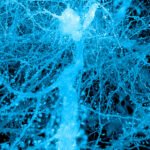
Nearly 150 years ago, scientists began to imagine how information might flow through the brain based on the shapes of neurons they had seen under the microscopes of the time. With today’s imaging technologies, scientists can zoom in much further, seeing the tiny synapses through which neurons communicate with one another, and even the molecules the cells use to relay their messages. These inside views can spark new ideas about how healthy brains work and reveal important changes that...

Read More

Wearable device tracks individual cells in the...
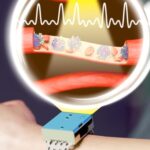
Researchers at MIT have developed a noninvasive medical monitoring device powerful enough to detect single cells within blood vessels, yet small enough to wear like a wristwatch. One important aspect of this wearable device is that it can enable continuous monitoring of circulating cells in the human body. The technology was presented online on March 3 by the journal npj Biosensing and is forthcoming in the journal’s print version. The device — named CircTrek — was developed by researchers in...

Read More

MIT D-Lab spinout provides emergency transportation during...
Amama has lived in a rural region of northern Ghana all her life. In 2022, she went into labor with her first child. Women traditionally give birth at home with the help of a local birthing attendant, but Amama experienced last-minute complications, and the decision was made to go to a hospital. Unfortunately, there were no ambulances in the community and the nearest hospital was 30 minutes away, so Amama was forced to take a motorcycle taxi, leaving her...

Read More

 
“Periodic table of machine learning” could fuel...
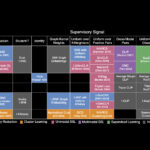
MIT researchers have created a periodic table that shows how more than 20 classical machine-learning algorithms are connected. The new framework sheds light on how scientists could fuse strategies from different methods to improve existing AI models or come up with new ones. For instance, the researchers used their framework to combine elements of two different algorithms to create a new image-classification algorithm that performed 8 percent better than current state-of-the-art approaches. The periodic table stems from one key...

Read More

3D modeling you can feel
Essential for many industries ranging from Hollywood computer-generated imagery to product design, 3D modeling tools often use text or image prompts to dictate different aspects of visual appearance, like color and form. As much as this makes sense as a first point of contact, these systems are still limited in their realism due to their neglect of something central to the human experience: touch. Fundamental to the uniqueness of physical objects are their tactile properties, such as roughness, bumpiness,...

Read More

Kripa Varanasi named faculty director of the...
Kripa Varanasi, professor of mechanical engineering, was named faculty director of the MIT Deshpande Center for Technological Innovation, effective March 1. “Kripa is widely recognized for his significant contributions in the field of interfacial science, thermal fluids, electrochemical systems, and advanced materials. It’s remarkable to see the tangible impact Kripa’s ventures have made across such a wide range of fields,” says Anantha P. Chandrakasan, dean of the School of Engineering, chief innovation and strategy officer, and Vannevar Bush Professor of...

Read More

 
“Biomedical Lab in a Box” empowers engineers...
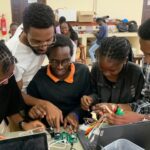
Globally, and especially in low- and middle-income countries (LMICs), a significant portion of the population lacks access to essential health-care services. Although there are many contributing factors that create barriers to access, in many LMICs failing or obsolete equipment plays a significant role. “Those of us who have investigated health-care systems in LMICs are familiar with so-called ‘equipment graveyards,’” says Nevan Hanumara SM ’06, PhD ’12, a research scientist in MIT’s Department of Mechanical Engineering, describing piles of broken, imported...

Read More

Norma Kamali is transforming the future of...
What happens when a fashion legend taps into the transformative power of artificial intelligence? For more than five decades, fashion designer and entrepreneur Norma Kamali has pioneered bold industry shifts, creating iconic silhouettes worn by celebrities including Whitney Houston and Jessica Biel. Now, she is embracing a new frontier — one that merges creativity with algorithms and AI to redefine the future of her industry. Through MIT Professional Education’s online “Applied Generative AI for Digital Transformation” course, which she...

Read More

Astronomers discover a planet that’s rapidly disintegrating,...
MIT astronomers have discovered a planet some 140 light-years from Earth that is rapidly crumbling to pieces. The disintegrating world is about the mass of Mercury, although it circles about 20 times closer to its star than Mercury does to the sun, completing an orbit every 30.5 hours. At such close proximity to its star, the planet is likely covered in magma that is boiling off into space. As the roasting planet whizzes around its star, it is shedding...

Read More

 
MIT’s McGovern Institute is shaping brain science...
In 2000, Patrick J. McGovern ’59 and Lore Harp McGovern made an extraordinary gift to establish the McGovern Institute for Brain Research at MIT, driven by their deep curiosity about the human mind and their belief in the power of science to change lives. Their $350 million pledge began with a simple yet audacious vision: to understand the human brain in all its complexity, and to leverage that understanding for the betterment of humanity. Twenty-five years later, the McGovern Institute...

Read More

Making AI-generated code more accurate in any...
Programmers can now use large language models (LLMs) to generate computer code more quickly. However, this only makes programmers’ lives easier if that code follows the rules of the programming language and doesn’t cause a computer to crash. Some methods exist for ensuring LLMs conform to the rules of whatever language they are generating text in, but many of these methods either distort the model’s intended meaning or are too time-consuming to be feasible for complex tasks. A new...

Read More

Student spotlight: YongYan (Crystal) Liang
The following is part of a series of short interviews from the Department of Electrical Engineering and Computer Science (EECS). Each spotlight features a student answering questions about themselves and life at MIT. Today’s interviewee, YongYan (Crystal) Liang, is a senior majoring in EECS with a particular interest in bioengineering and medical devices — which led her to join the Living Machines track as part of New Engineering Education Transformation (NEET) at MIT. An Advanced Undergraduate Research Opportunities Program (SuperUROP) scholar,...

Read More