Say WOW

Suborbital space tourism finally arrives | FCC prepares to run public C-band auction | The big four in the U.S. launch industry — United Launch Alliance, SpaceX, Blue Origin and Northrop Grumman — hope to be one of two providers that will receive five-year contracts later this year to launch national security payloads starting in 2022. | China’s launch rate stays high | The International Space Station is the largest ever crewed object in space.

 
3 Questions: Energy studies at MIT and...
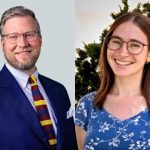
Students who engage in energy studies at MIT develop an integrative understanding of energy as well as skills required of tomorrow’s energy professionals, leaders, and innovators in research, industry, policy, management, and governance. Two energy alumni recently shared their experiences as part of MIT’s energy community, and how their work connects to energy today. Abigail Ostriker ’16, who majored in applied mathematics, is now pursuing a PhD in economics at MIT, where she is conducting research into whether subsidized...
Read More

Study finds that aging neurons accumulate DNA...
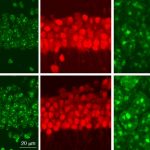
MIT neuroscientists have discovered that an enzyme called HDAC1 is critical for repairing age-related DNA damage to genes involved in memory and other cognitive functions. This enzyme is often diminished in both Alzheimer’s patients and normally aging adults. In a study of mice, the researchers showed that when HDAC1 is lost, a specific type of DNA damage builds up as the mice age. They also showed that they could reverse this damage and improve cognitive function with a drug...

Read More

The changing world of work
With 20.5 million jobs slashed from U.S. payrolls in April and a 14.7 percent unemployment rate, the Covid-19 pandemic has created workforce problems unseen since the Great Depression. These dynamics are being closely observed by MIT’s Task Force on the Work of the Future, which released a high-profile interim report last September, with a nuanced set of findings: Automation is unlikely to eliminate millions of U.S. jobs soon, but improved policies are needed to support many workers, who have...

Read More

 
Melting glaciers cool the Southern Ocean
Tucked away at the very bottom of the globe surrounding Antarctica, the Southern Ocean has never been easy to study. Its challenging conditions have placed it out of reach to all but the most intrepid explorers. For climate modelers, however, the surface waters of the Southern Ocean provide a different kind of challenge: It doesn’t behave the way they predict it would. “It is colder and fresher than the models expected,” says Craig Rye, a postdoc in the group...

Read More

Letter regarding efforts to chart MIT’s course...
The following letter was sent to MIT’s community today by President L. Rafael Reif. To the members of the MIT community, MIT must soon make important decisions about how our community can safely re-emerge. Because those decisions will have cascading impacts for all of us, I want to let you know what to expect in the short term – and to outline the ways we will be seeking your input and asking you to join in thinking through MIT’s...

Read More

A data-driven response to a pandemic
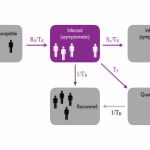
The Covid-19 pandemic continues to challenge how societies and institutions function at macro and micro scales. In the United States, the novel coronavirus has affected everything from the economy to elections — and has raised difficult questions about MIT’s capacity to reopen in the fall. To help policymakers at MIT and beyond make informed decisions, the Institute for Data, Systems, and Society (IDSS) has formed a volunteer research group, Isolat, that provides analysis of pandemic-related data. “This pandemic has...

Read More

 
MIT student leaders go virtual with global...
On April 22, the MIT Water Club hosted its annual Water Innovation Prize Pitch Night, the culminating event of a year-long international competition for student innovators seeking to launch water sector companies. This event, now in its sixth year, normally gathers over 250 people to MIT’s campus to cheer on finalist teams from around the world as they compete for cash awards. Yet, six weeks before the event, when the Water Club would usually be finalizing logistics and collecting...

Read More

Achieving advisory equilibrium
Converting raw potential into a dissertation is no easy feat. Dependable mentorship can play a profound role in cultivating engaged, capable, and resilient scholars. Professors Paola Cappellaro, Warren Seering, and Lily Tsai have been honored by their graduate students as “Committed to Caring” for their adaptability and stable guidance as advisors, helping their students weather setbacks and continue to find delight in discovery, even in the midst of a pandemic. Paola Cappellaro: Igniting enthusiasm Paola Cappellaro is a professor...

Read More

MIT builds community for the Africa Takes...
It all started, like so many things recently, with a Zoom call. David Capodilupo, assistant dean for MIT Sloan Global Programs (GP); Bill Carter, award-winning filmmaker, author, teacher, and MIT consultant; and Stu Krusell, senior director at GP, were discussing what they could do to support the fight against Covid-19 in Africa. The need was immense. They talked about leveraging the vast network and resources of MIT to help those on the ground in Africa fighting the virus. The...

Read More

 
“Lean lab” approach enables quick research ramp...
When MIT announced in March that most research labs on campus would need to ramp down to help prevent the spread of Covid-19, Canan Dagdeviren’s lab was ready. For the past two years, Dagdeviren and her lab manager, David Sadat, have run the Conformable Decoders Group using “lean lab” management principles, working closely with MIT’s Environment, Health and Safety Office (EHS). Every item in their lab has an assigned function and location, and there are strict procedures in place...

Read More

Susan Solomon earns Killian Award, MIT’s highest...
Atmospheric chemist Susan Solomon, whose pioneering scientific and environmental policy work has helped to shape international agreements for healing the ozone layer and mitigating climate change, has been named the recipient of the 2020-2021 James R. Killian Jr. Faculty Achievement Award. The Killian Award is the highest honor the MIT faculty can give to one of its members, to recognize “outstanding contributions to their fields, to MIT, and to society.” “I am truly very, very touched,” Solomon says. “I...

Read More

Testing whether uncertified N95 masks are effective
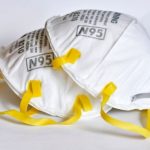
Ever since Covid-19 began spreading in the U.S., state governments have been scrambling to find and secure N95 respirator masks, the kind that seal against the face and filter out infectious particles, protecting frontline workers from inhaling the coronavirus. A national shortage has led states to buy these masks from uncertified foreign producers or from producers that sell foreign-certified products.  “Every state has had to go and buy whatever they can find,” says William Herzog, an assistant leader of...

Read More

 
SMART researchers uncover new anti-phage defense mechanisms
Researchers from Singapore-MIT Alliance for Research and Technology (SMART), MIT’s research enterprise in Singapore, have discovered a new anti-phage defense mechanism found in some bacteria, which use previously unknown features to protect their DNA. The groundbreaking discovery enables scientists to overcome existing challenges in bacterial resistance to antibiotics. The growing antimicrobial resistance is a major concern for the global health community, and phage therapy is an important pillar in combating bacterial infections. Bacteriophages, an effective alternative to fight bacteria...

Read More

Virtual hackathon unites international community to tackle...
A team of competitors cluster around a laptop screen; their table is decorated with snacks, caffeinated drinks, and scribbled Post-it notes. Stationed inside a large room with 100 other participants for 48 hours, they battle it out at HealthHACK. The place is buzzing and the energy is intense. This was the scene last year at MIT Hong Kong Innovation Node’s annual hackathon. This year, the event took a virtual pivot when the Covid-19 outbreak went into full swing. Undaunted...

Read More

Informing Covid-19 preparedness in Sierra Leone
As Covid-19 continues to spread, governments in West Africa have been working to meet the virus head-on. In Sierra Leone, the government took measures back in December 2019 to quarantine all travelers from countries reporting Covid-19 cases and travelers with high temperatures. With limited public health infrastructure, slowing the spread has been critical to protecting their population of nearly 8 million. In late March, Sierra Leone confirmed the first case in-country, put in place a temporary lockdown, and convened...

Read More