Say WOW

Suborbital space tourism finally arrives | FCC prepares to run public C-band auction | The big four in the U.S. launch industry — United Launch Alliance, SpaceX, Blue Origin and Northrop Grumman — hope to be one of two providers that will receive five-year contracts later this year to launch national security payloads starting in 2022. | China’s launch rate stays high | The International Space Station is the largest ever crewed object in space.

 
$20 million gift supports theoretical physics research...

A $20 million gift from the Leinweber Foundation, in addition to a $5 million commitment from the MIT School of Science, will support theoretical physics research and education at MIT. Leinweber Foundation gifts to five institutions, totaling $90 million, will establish the newly renamed MIT Center for Theoretical Physics – A Leinweber Institute within the Department of Physics, affiliated with the Laboratory for Nuclear Science at the School of Science, as well as Leinweber Institutes for Theoretical Physics at...

Read More

MIT D-Lab students design global energy solutions...
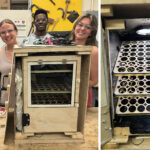
This semester, MIT D-Lab students built prototype solutions to help farmers in Afghanistan, people living in informal settlements in Argentina, and rural poultry farmers in Cameroon. The projects span continents and collectively stand to improve thousands of lives — and they all trace back to two longstanding MIT D-Lab classes. For nearly two decades, 2.651 / EC.711 (Introduction to Energy in Global Development) and 2.652 / EC.712 (Applications of Energy in Global Development) have paired students with international organizations...

Read More

Shaping the future through systems thinking
Long before she stepped into a lab, Ananda Santos Figueiredo was stargazing in Brazil, captivated by the cosmos and feeding her curiosity of science through pop culture, books, and the internet. She was drawn to astrophysics for its blend of visual wonder and mathematics. Even as a child, Santos sensed her aspirations reaching beyond the boundaries of her hometown. “I’ve always been drawn to STEM,” she says. “I had this persistent feeling that I was meant to go somewhere...

Read More

 
MIT announces the Initiative for New Manufacturing
MIT today launched its Initiative for New Manufacturing (INM), an Institute-wide effort to reinfuse U.S. industrial production with leading-edge technologies, bolster crucial U.S. economic sectors, and ignite job creation. The initiative will encompass advanced research, innovative education programs, and partnership with companies across many sectors, in a bid to help transform manufacturing and elevate its impact. “We want to work with firms big and small, in cities, small towns and everywhere in between, to help them adopt new approaches...

Read More

The proud history and promising future of...
MIT’s Initiative for New Manufacturing, announced today by President Sally A. Kornbluth, is the latest installment in a grand tradition: Since its founding, MIT has worked overtime to expand U.S. manufacturing, creating jobs and economic growth. Indeed, one of the strongest through lines in MIT history is its commitment to U.S. manufacturing, which the Institute has pursued in economic good times and lean times, during wartime and in peacetime, and across scores of industries. MIT was founded in 1861...

Read More

Overlooked cells might explain the human brain’s...
The human brain contains about 86 billion neurons. These cells fire electrical signals that help the brain store memories and send information and commands throughout the brain and the nervous system. The brain also contains billions of astrocytes — star-shaped cells with many long extensions that allow them to interact with millions of neurons. Although they have long been thought to be mainly supportive cells, recent studies have suggested that astrocytes may play a role in memory storage and...

Read More

 
A magnetic pull toward materials
Growing up in Coeur d’Alene, Idaho, with engineer parents who worked in the state’s silver mining industry, MIT senior Maria Aguiar developed an early interest in materials. The star garnet, the state’s mineral, is still her favorite. It’s a sheer coincidence, though, that her undergraduate thesis also focuses on garnets. Her research explores ways to manipulate the magnetic properties of garnet thin films — work that can help improve data storage technologies. After all, says Aguiar, a major in...

Read More

Study: Climate change may make it harder...
Global warming will likely hinder our future ability to control ground-level ozone, a harmful air pollutant that is a primary component of smog, according to a new MIT study. The results could help scientists and policymakers develop more effective strategies for improving both air quality and human health. Ground-level ozone causes a host of detrimental health impacts, from asthma to heart disease, and contributes to thousands of premature deaths each year. The researchers’ modeling approach reveals that, as the...

Read More

Learning how to predict rare kinds of...
On Dec. 21, 2022, just as peak holiday season travel was getting underway, Southwest Airlines went through a cascading series of failures in their scheduling, initially triggered by severe winter weather in the Denver area. But the problems spread through their network, and over the course of the next 10 days the crisis ended up stranding over 2 million passengers and causing losses of $750 million for the airline. How did a localized weather system end up triggering such...

Read More

 
A new technology for extending the shelf...
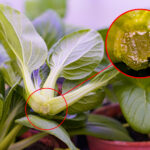
We’ve all felt the sting of guilt when fruit and vegetables go bad before we could eat them. Now, researchers from MIT and the Singapore-MIT Alliance for Research and Technology (SMART) have shown they can extend the shelf life of harvested plants by injecting them with melatonin using biodegradable microneedles. That’s a big deal because the problem of food waste goes way beyond our salads. More than 30 percent of the world’s food is lost after it’s harvested —...

Read More

Startup enables 100-year bridges with corrosion-resistant steel
According to the American Road and Transportation Builders Association, one in three bridges needs repair or replacement, amounting to more than 200,000 bridges across the country. A key culprit of America’s aging infrastructure is rebar that has accumulated rust, which cracks, and then breaks apart, the concrete around it, making bridges more likely to collapse. Now Allium Engineering, founded by two MIT PhDs, is tripling the lifetime of bridges and other structures with a new technology that uses a stainless...

Read More

Fueling social impact: PKG IDEAS Challenge invests...
On Wednesday, April 16, members of the MIT community gathered at the MIT Welcome Center to celebrate the annual IDEAS Social Innovation Challenge Showcase and Awards ceremony. Hosted by the Priscilla King Gray Public Service Center (PKG Center), the event celebrated 19 student-led teams who spent the spring semester developing and implementing solutions to complex social and environmental challenges, both locally and globally. Founded in 2001, the IDEAS Challenge is an experiential learning incubator that prepares students to take their early-stage social enterprises...

Read More

 
Is gravity quantum?
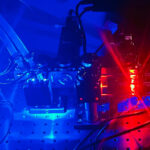
One of the most profound open questions in modern physics is: “Is gravity quantum?”  The other fundamental forces — electromagnetic, weak, and strong — have all been successfully described, but no complete and consistent quantum theory of gravity yet exists.   “Theoretical physicists have proposed many possible scenarios, from gravity being inherently classical to fully quantum, but the debate remains unresolved because we’ve never had a clear way to test gravity’s quantum nature in the lab,” says Dongchel Shin,...

Read More

Technique rapidly measures cells’ density, reflecting health...
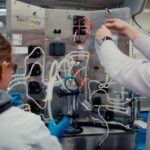
Measuring the density of a cell can reveal a great deal about the cell’s state. As cells proliferate, differentiate, or undergo cell death, they may gain or lose water and other molecules, which is revealed by changes in density. Tracking these tiny changes in cells’ physical state is difficult to do at a large scale, especially with single-cell resolution, but a team of MIT researchers has now found a way to measure cell density quickly and accurately — measuring...

Read More

Imaging technique removes the effect of water...
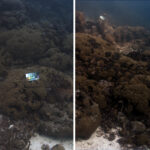
The ocean is teeming with life. But unless you get up close, much of the marine world can easily remain unseen. That’s because water itself can act as an effective cloak: Light that shines through the ocean can bend, scatter, and quickly fade as it travels through the dense medium of water and reflects off the persistent haze of ocean particles. This makes it extremely challenging to capture the true color of objects in the ocean without imaging them...

Read More