Say WOW

Suborbital space tourism finally arrives | FCC prepares to run public C-band auction | The big four in the U.S. launch industry — United Launch Alliance, SpaceX, Blue Origin and Northrop Grumman — hope to be one of two providers that will receive five-year contracts later this year to launch national security payloads starting in 2022. | China’s launch rate stays high | The International Space Station is the largest ever crewed object in space.

 
“Cold spray” 3D printing technique proves effective...

More than half of the nation’s 623,218 bridges are experiencing significant deterioration. Through an in-field case study conducted in western Massachusetts, a team led by the University of Massachusetts at Amherst in collaboration with researchers from the MIT Department of Mechanical Engineering (MechE) has just successfully demonstrated that 3D printing may provide a cost-effective, minimally disruptive solution. “Anytime you drive, you go under or over a corroded bridge,” says Simos Gerasimidis, associate professor of civil and environmental engineering at...

Read More

Memory safety is at a tipping point
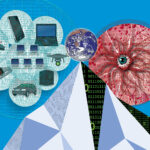
Social security numbers stolen. Public transport halted. Hospital systems frozen until ransoms are paid. These are some of the damaging consequences of unsecure memory in computer systems. Over the past decade, public awareness of such cyberattacks has intensified, as their impacts have harmed individuals, corporations, and governments. Today, this awareness is coinciding with technologies that are finally mature enough to eliminate vulnerabilities in memory safety.   “We are at a tipping point — now is the right time to move...

Read More

The MIT Press acquires University Science Books...
The MIT Press announces the acquisition of textbook publisher University Science Books from AIP Publishing, a subsidiary of the American Institute of Physics (AIP). University Science Books was founded in 1978 to publish intermediate- and advanced-level science and reference books by respected authors, published with the highest design and production standards, and priced as affordably as possible. Over the years, USB’s authors have acquired international followings, and its textbooks in chemistry, physics, and astronomy have been recognized as the gold standard in...

Read More

 
Supercharged vaccine could offer strong protection with...
Researchers at MIT and the Scripps Research Institute have shown that they can generate a strong immune response to HIV with just one vaccine dose, by adding two powerful adjuvants — materials that help stimulate the immune system. In a study of mice, the researchers showed that this approach produced a much wider diversity of antibodies against an HIV antigen, compared to the vaccine given on its own or with just one of the adjuvants. The dual-adjuvant vaccine accumulated...

Read More

Combining technology, education, and human connection to...
MIT Morningside Academy for Design (MAD) Fellow Caitlin Morris is an architect, artist, researcher, and educator who has studied psychology and used online learning tools to teach herself coding and other skills. She’s a soft-spoken observer, with a keen interest in how people use space and respond to their environments. Combining her observational skills with active community engagement, she works at the intersection of technology, education, and human connection to improve digital learning platforms. Morris grew up in rural upstate New York...

Read More

Gaspare LoDuca named VP for information systems...
Gaspare LoDuca has been appointed MIT’s vice president for information systems and technology (IS&T) and chief information officer, effective Aug. 18. Currently vice president for information technology and CIO at Columbia University, LoDuca has held IT leadership roles in or related to higher education for more than two decades. He succeeds Mark Silis, who led IS&T from 2019 until 2024, when he left MIT to return to the entrepreneurial ecosystem in the San Francisco Bay area. Executive Vice President...

Read More

 
Closing in on superconducting semiconductors
In 2023, about 4.4 percent (176 terawatt-hours) of total energy consumption in the United States was by data centers that are essential for processing large quantities of information. Of that 176 TWh, approximately 100 TWh (57 percent) was used by CPU and GPU equipment. Energy requirements have escalated substantially in the past decade and will only continue to grow, making the development of energy-efficient computing crucial.  Superconducting electronics have arisen as a promising alternative for classical and quantum computing, although...

Read More

A brief history of the global economy,...
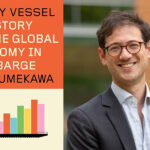
In 1989, New York City opened a new jail. But not on dry land. The city leased a barge, then called the “Bibby Resolution,” which had been topped with five stories of containers made into housing, and anchored it in the East River. For five years, the vessel lodged inmates. A floating detention center is a curiosity. But then, the entire history of this barge is curious. Built in 1979 in Sweden, it housed British troops during the Falkland...

Read More

Students and staff work together for MIT’s...
In recent years, some grass lawns around the country have grown a little taller in springtime thanks to No Mow May, a movement originally launched by U.K. nonprofit Plantlife in 2019 designed to raise awareness about the ecological impacts of the traditional, resource-intensive, manicured grass lawn. No Mow May encourages people to skip spring mowing to allow for grass to grow tall and provide food and shelter for beneficial creatures including bees, beetles, and other pollinators. This year, MIT...

Read More

 
Professor Emeritus Hank Smith honored for pioneering...
Nanostructures are a stunning array of intricate patterns that are imperceptible to the human eye, yet they help power modern life. They are the building blocks of microchip transistors, etched onto grating substrates of space-based X-ray telescopes, and drive innovations in medicine, sustainability, and quantum computing. Since the 1970s, Henry “Hank” Smith, MIT professor emeritus of electrical engineering, has been a leading force in this field. He pioneered the use of proximity X-ray lithography, proving that X-rays’ short optical...

Read More

Celebrating an academic-industry collaboration to advance vehicle...
On May 6, MIT AgeLab’s Advanced Vehicle Technology (AVT) Consortium, part of the MIT Center for Transportation and Logistics, celebrated 10 years of its global academic-industry collaboration. AVT was founded with the aim of developing new data that contribute to automotive manufacturers, suppliers, and insurers’ real-world understanding of how drivers use and respond to increasingly sophisticated vehicle technologies, such as assistive and automated driving, while accelerating the applied insight needed to advance design and development. The celebration event brought...

Read More

Startup’s biosensor makes drug development and manufacturing...
In the biotech and pharmaceutical industries, ELISA tests provide critical quality control during drug development and manufacturing. The tests can precisely quantify protein levels, but they also require hours of work by trained technicians and specialized equipment. That makes them prohibitively expensive, driving up the costs of drugs and putting research testing out of reach for many. Now the Advanced Silicon Group (ASG), founded by Marcie Black ’94, MEng ’95, PhD ’03 and Bill Rever, is commercializing a new...

Read More

 
First-of-its-kind device profiles newborns’ immune function
Using a single drop of blood, the BiophysicaL Immune Profiling for Infants (BLIPI) system provides real-time insights into newborns’ immune responses, enabling the early detection of severe inflammatory conditions and allowing for timely interventions. This critical innovation addresses the urgent and unmet need for rapid and minimally invasive diagnostic tools to protect vulnerable newborns, especially those born prematurely. Critical unmet need in newborn care Premature infants are particularly vulnerable to life-threatening conditions such as sepsis and necrotizing enterocolitis (NEC). Newborn sepsis — a...

Read More

After more than a decade of successes,...
MIT’s Environmental Solutions Initiative (ESI), a pioneering cross-disciplinary body that helped give a major boost to sustainability and solutions to climate change at MIT, will close as a separate entity at the end of June. But that’s far from the end for its wide-ranging work, which will go forward under different auspices. Many of its key functions will become part of MIT’s recently launched Climate Project. John Fernandez, head of ESI for nearly a decade, will return to the...

Read More

Decarbonizing steel is as tough as steel
The long-term aspirational goal of the Paris Agreement on climate change is to cap global warming at 1.5 degrees Celsius above preindustrial levels, and thereby reduce the frequency and severity of floods, droughts, wildfires, and other extreme weather events. Achieving that goal will require a massive reduction in global carbon dioxide (CO2) emissions across all economic sectors. A major roadblock, however, could be the industrial sector, which accounts for roughly 25 percent of global energy- and process-related CO2 emissions...

Read More