Say WOW

Suborbital space tourism finally arrives | FCC prepares to run public C-band auction | The big four in the U.S. launch industry — United Launch Alliance, SpaceX, Blue Origin and Northrop Grumman — hope to be one of two providers that will receive five-year contracts later this year to launch national security payloads starting in 2022. | China’s launch rate stays high | The International Space Station is the largest ever crewed object in space.

 
How repetition helps art speak to us

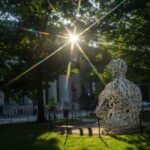
Often when we listen to music, we just instinctually enjoy it. Sometimes, though, it’s worth dissecting a song or other composition to figure out how it’s built. Take the 1953 jazz standard “Satin Doll,” written by Duke Ellington and Billy Strayhorn, whose subtle structure rewards a close listening. As it happens, MIT Professor Emeritus Samuel Jay Keyser, a distinguished linguist and an avid trombonist on the side, has given the song careful scrutiny. To Keyser, “Satin Doll” is a glittering...

Read More

MIT engineers develop electrochemical sensors for cheap,...
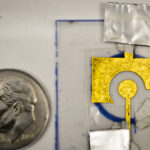
Using an inexpensive electrode coated with DNA, MIT researchers have designed disposable diagnostics that could be adapted to detect a variety of diseases, including cancer or infectious diseases such as influenza and HIV. These electrochemical sensors make use of a DNA-chopping enzyme found in the CRISPR gene-editing system. When a target such as a cancerous gene is detected by the enzyme, it begins shearing DNA from the electrode nonspecifically, like a lawnmower cutting grass, altering the electrical signal produced....

Read More

New imaging technique reconstructs the shapes of...
A new imaging technique developed by MIT researchers could enable quality-control robots in a warehouse to peer through a cardboard shipping box and see that the handle of a mug buried under packing peanuts is broken. Their approach leverages millimeter wave (mmWave) signals, the same type of signals used in Wi-Fi, to create accurate 3D reconstructions of objects that are blocked from view. The waves can travel through common obstacles like plastic containers or interior walls, and reflect off...

Read More

 
New method combines imaging and sequencing to...
Imagine that you want to know the plot of a movie, but you only have access to either the visuals or the sound. With visuals alone, you’ll miss all the dialogue. With sound alone, you will miss the action. Understanding our biology can be similar. Measuring one kind of data — such as which genes are being expressed — can be informative, but it only captures one facet of a multifaceted story. For many biological processes and disease mechanisms,...

Read More

President Emeritus Reif reflects on successes as...
As an electrical engineering student at Stanford University in the late 1970s, L. Rafael Reif was working on not only his PhD but also learning a new language. “I didn’t speak English. And I saw that it was easy to ignore somebody who doesn’t speak English well,” Reif recalled. To him, that meant speaking with conviction. “If you have tremendous technical skills, but you cannot communicate, if you cannot persuade others to embrace that, it’s not going to go...

Read More

Faces of MIT: Ylana Lopez
Ylana Lopez oversees programs and events at the Martin Trust Center for MIT Entrepreneurship. The Trust Center offers more than 60 entrepreneurship and innovation courses across campus, a dedicated entrepreneurship and innovation track for students pursuing their MBA, online courses for self-learners at MIT and around the globe, and programs for people both affiliated and not affiliated with the Institute. As assistant director, academics and events, at the Trust Center, Lopez leads an array of programs and events, while...

Read More

 
Using generative AI to help robots jump...
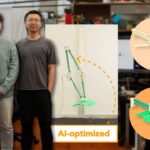
Diffusion models like OpenAI’s DALL-E are becoming increasingly useful in helping brainstorm new designs. Humans can prompt these systems to generate an image, create a video, or refine a blueprint, and come back with ideas they hadn’t considered before. But did you know that generative artificial intelligence (GenAI) models are also making headway in creating working robots? Recent diffusion-based approaches have generated structures and the systems that control them from scratch. With or without a user’s input, these models can...

Read More

MIT and Mass General Brigham launch joint...
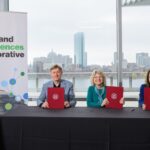
Leveraging the strengths of two world-class research institutions, MIT and Mass General Brigham (MGB) recently celebrated the launch of the MIT-MGB Seed Program. The new initiative, which is supported by Analog Devices Inc. (ADI), will fund joint research projects led by researchers at MIT and Mass General Brigham. These collaborative projects will advance research in human health, with the goal of developing next-generation therapies, diagnostics, and digital tools that can improve lives at scale.  The program represents a unique...

Read More

Face-to-face with Es Devlin
Es Devlin, the winner of the 2025 Eugene McDermott Award in the Arts at MIT, creates settings for people to gather — whether it’s a few people in a room or crowds swelling a massive stadium — arenas in which to dissolve one’s individual sense of self into the greater collective. She herself contains multitudes; equally at home with 17th century metaphysical English poet John Donne, 21st century icon of music and fashion Lady Gaga, or Italian theoretical physicist...

Read More

 
Summer 2025 reading from MIT
Summer is the perfect time to curl up with a good book — and MIT authors have had much to offer in the past year. The following titles represent some of the books published in the past 12 months by MIT faculty and staff. In addition to links for each book from its publisher, the MIT Libraries has compiled a helpful list of the titles held in its collections. Looking for more literary works from the MIT community? Enjoy...

Read More

Merging AI and underwater photography to reveal...
In the Northeastern United States, the Gulf of Maine represents one of the most biologically diverse marine ecosystems on the planet — home to whales, sharks, jellyfish, herring, plankton, and hundreds of other species. But even as this ecosystem supports rich biodiversity, it is undergoing rapid environmental change. The Gulf of Maine is warming faster than 99 percent of the world’s oceans, with consequences that are still unfolding. A new research initiative developing at MIT Sea Grant, called LOBSTgER...

Read More

From MIT, an instruction manual for turning...
Since MIT opened the first-of-its-kind venture studio within a university in 2019, it has demonstrated how a systemic process can help turn research into impactful ventures.  Now, MIT Proto Ventures is launching the “R&D Venture Studio Playbook,” a resource to help universities, national labs, and corporate R&D offices establish their own in-house venture studios. The online publication offers a comprehensive framework for building ventures from the ground up within research environments. “There is a huge opportunity cost to letting great research...

Read More

 
Four from MIT named 2025 Goldwater Scholars
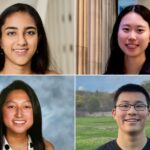
Four MIT rising seniors have been selected to receive a 2025 Barry Goldwater Scholarship, including Avani Ahuja and Jacqueline Prawira in the School of Engineering and Julianna Lian and Alex Tang from the School of Science. An estimated 5,000 college sophomores and juniors from across the United States were nominated for the scholarships, of whom only 441 were selected. The Goldwater Scholarships have been conferred since 1989 by the Barry Goldwater Scholarship and Excellence in Education Foundation. These scholarships...

Read More

The tenured engineers of 2025
In 2025, MIT granted tenure to 11 faculty members across the School of Engineering. This year’s tenured engineers hold appointments in the departments of Aeronautics and Astronautics, Biological Engineering, Chemical Engineering, Electrical Engineering and Computer Science (EECS) — which reports jointly to the School of Engineering and MIT Schwarzman College of Computing — Materials Science and Engineering, Mechanical Engineering, and Nuclear Science and Engineering. “It is with great pride that I congratulate the 11 newest tenured faculty members in...

Read More

MIT engineers uncover a surprising reason why...
Water makes up around 60 percent of the human body. More than half of this water sloshes around inside the cells that make up organs and tissues. Much of the remaining water flows in the nooks and crannies between cells, much like seawater between grains of sand. Now, MIT engineers have found that this “intercellular” fluid plays a major role in how tissues respond when squeezed, pressed, or physically deformed. Their findings could help scientists understand how cells, tissues,...

Read More