Say WOW

Suborbital space tourism finally arrives | FCC prepares to run public C-band auction | The big four in the U.S. launch industry — United Launch Alliance, SpaceX, Blue Origin and Northrop Grumman — hope to be one of two providers that will receive five-year contracts later this year to launch national security payloads starting in 2022. | China’s launch rate stays high | The International Space Station is the largest ever crewed object in space.

 
Bio-inspired, blood-repelling tissue glue could seal wounds...
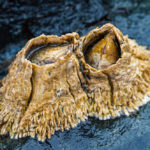
Inspired by the sticky substance that barnacles use to cling to rocks, MIT engineers have designed a strong, biocompatible glue that can seal injured tissues and stop bleeding. The new paste can adhere to surfaces even when they are covered with blood, and can form a tight seal within about 15 seconds of application. Such a glue could offer a much more effective way to treat traumatic injuries and to help control bleeding during surgery, the researchers say. “We...
Read More

New device can diagnose Covid-19 from saliva...
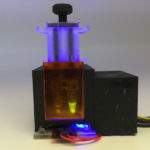
Engineers at MIT and Harvard University have designed a small tabletop device that can detect SARS-CoV-2 from a saliva sample in about an hour. In a new study, they showed that the diagnostic is just as accurate as the PCR tests now used. The device can also be used to detect specific viral mutations linked to some of the SARS-CoV-2 variants that are now circulating. This result can also be obtained within an hour, potentially making it much easier...

Read More

Reimagining an iconic design class
For the past 50 years, mechanical engineering students at MIT have convened on campus for a boisterous robot competition. Since the 1970s, when the late Professor Emeritus Woodie Flowers first challenged students to build a machine using a “kit of junk,” students in class 2.007 (Design and Manufacturing I) have designed and built their own robots to compete in the class’s final robot competition. For many students, the class and competition are a driving factor in their decision to...

Read More

 
Gerald Wogan, professor emeritus of biological engineering,...
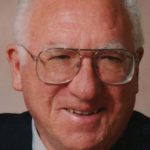
Gerald N. Wogan, the Underwood Prescott Professor of Biological Engineering, Chemistry, and Toxicology emeritus at MIT, passed away after a long illness on July 16 at the age of 91.  “Jerry” Wogan was a pioneering scientist who isolated, characterized, and established the mechanisms of action of many environmental toxins of great relevance to global public health. His leadership on aflatoxin research, a toxin that impacts the lives of billions of people, is a paradigm for environmental toxicology. His work...

Read More

New method opens the door to efficient...
Biological engineers at MIT have devised a new way to efficiently edit bacterial genomes and program memories into bacterial cells by rewriting their DNA. Using this approach, various forms of spatial and temporal information can be permanently stored for generations and retrieved by sequencing the cells’ DNA. The new DNA writing technique, which the researchers call HiSCRIBE, is much more efficient than previously developed systems for editing DNA in bacteria, which had a success rate of only about 1...

Read More

New drug combo shows early potential for...
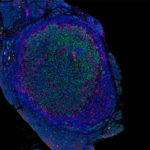
Pancreatic cancer, which affects about 60,000 Americans every year, is one of the deadliest forms of cancer. After diagnosis, fewer than 10 percent of patients survive for five years.  While some chemotherapies are initially effective, pancreatic tumors often become resistant to them. The disease has also proven difficult to treat with newer approaches such as immunotherapy. However, a team of MIT researchers has now developed an immunotherapy strategy and shown that it can eliminate pancreatic tumors in mice. The...

Read More

 
This touchy-feely glove senses and maps tactile...
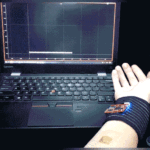
When you pick up a balloon, the pressure to keep hold of it is different from what you would exert to grasp a jar. And now engineers at MIT and elsewhere have a way to precisely measure and map such subtleties of tactile dexterity. The team has designed a new touch-sensing glove that can “feel” pressure and other tactile stimuli. The inside of the glove is threaded with a system of sensors that detects, measures, and maps small changes...

Read More

How authoritarian leaders maintain support
How do authoritarian regimes sustain their popularity? A novel study in China led by MIT scholars shows that anticorruption punishments meted out by government authorities receive significant support among citizens — who believe such actions demonstrate both competence and morally righteous leadership. The findings help explain how authoritarian governments endure, not merely based on domination and fear, but as regimes generating positive public support over time. “What we find is that not only does the punishment of corrupt officials...

Read More

Finding common ground in Malden
When disparate groups convene around a common goal, exciting things can happen. That is the inspiring story unfolding in Malden, Massachusetts, a city of about 60,000 — nearly half people of color — where a new type of community coalition continues to gain momentum on its plan to build a climate-resilient waterfront park along its river. The Malden River Works (MRW) project, recipient of the inaugural Leventhal City Prize, is seeking to connect to a contiguous greenway network where...

Read More

 
Using graphene foam to filter toxins from...
Some kinds of water pollution, such as algal blooms and plastics that foul rivers, lakes, and marine environments, lie in plain sight. But other contaminants are not so readily apparent, which makes their impact potentially more dangerous. Among these invisible substances is uranium. Leaching into water resources from mining operations, nuclear waste sites, or from natural subterranean deposits, the element can now be found flowing out of taps worldwide. In the United States alone, “many areas are affected by...

Read More

Matching health care offices with short-term workers
For small health-care groups like dentist’s offices, one sick staff member can mean a day’s worth of cancelled appointments. Such offices can either continue short-staffed, which could negatively affect patient care, or reschedule appointments, potentially delaying critical procedures and screenings. The MIT alumnus-founded Stynt is solving that problem by helping health care offices fill last-minute shift openings for positions including dental hygienists, assistants, office managers and dentists. Stynt’s online platform lets offices post openings that qualified professionals can then...

Read More

Kristy Johnson: Expanding communication for all
As a teenager, Kristy Johnson thought she had her career all planned out. Raised in a small town in Indiana, she spent much of her childhood stargazing and mapping constellations. She dreamed of becoming an astrophysicist and pursued a rigorous academic path. After achieving top honors as an undergraduate, Johnson immediately began a PhD program in physics at the University of Maryland. Everything changed when she discovered her son, Felix, had a rare genetic disorder, one with only seven...

Read More

 
3 Questions: David Kaiser and Julie Shah...
David Kaiser and Julie Shah are on a mission to prepare students and facilitate research to address the broad challenges and opportunities associated with computing. As associate deans of Social and Ethical Responsibilities of Computing (SERC) in the MIT Stephen A. Schwarzman College of Computing, Kaiser and Shah are advancing a number of initiatives they hope will get students and faculty to reflect on the potential social, ethical, and policy implications of new technologies. To help guide their efforts,...

Read More

Knight Science Journalism Program announces 2021-22 fellows
The Knight Science Journalism Program at MIT (KSJ) has announced that it has selected a group of 21 distinguished science journalists for its 2021-22 project fellowship class — a cohort that ranges from award-winning freelance writers to staff reporters for outlets such as The Dallas Morning News, The New York Times, and MIT Technology Review. It marks the second year that KSJ will offer the remote project fellowships, which were established in response to the unique challenges and public...

Read More

Mapping the cellular circuits behind spitting
For over a decade, researchers have known that the roundworm Caenorhabditis elegans can detect and avoid short-wavelength light, despite lacking eyes and the light-absorbing molecules required for sight. As a graduate student in the Horvitz lab, Nikhil Bhatla proposed an explanation for this ability. He observed that light exposure not only made the worms wriggle away, but it also prompted them to stop eating. This clue led him to a series of studies that suggested that his squirming subjects weren’t seeing the light at...

Read More