Say WOW

Suborbital space tourism finally arrives | FCC prepares to run public C-band auction | The big four in the U.S. launch industry — United Launch Alliance, SpaceX, Blue Origin and Northrop Grumman — hope to be one of two providers that will receive five-year contracts later this year to launch national security payloads starting in 2022. | China’s launch rate stays high | The International Space Station is the largest ever crewed object in space.

 
Maria Zuber testifies before Congress on striking...
The United States must perform a careful balancing act to secure federally funded research against improper interference from China and other foreign governments without shutting down valuable international scientific research collaborations, MIT Vice President for Research Maria T. Zuber said this week in testimony before Congress. Speaking at a virtual hearing held by two subcommittees of the U.S. House Science Committee, on “Balancing Open Science and Security in the U.S. Research Enterprise,” Zuber said that both the federal government...

Read More

Enabling AI-driven health advances without sacrificing patient...
There’s a lot of excitement at the intersection of artificial intelligence and health care. AI has already been used to improve disease treatment and detection, discover promising new drugs, identify links between genes and diseases, and more. By analyzing large datasets and finding patterns, virtually any new algorithm has the potential to help patients — AI researchers just need access to the right data to train and test those algorithms. Hospitals, understandably, are hesitant to share sensitive patient information...

Read More

3 Questions: Understanding the Haiti earthquakes
On Aug. 14, a magnitude 7.2 earthquake struck Haiti. The largest earthquake in the region since 2010, the disaster left at least 2,000 people dead, 12,000 people injured, and nearly 53,000 houses destroyed. Two assistant professors in the MIT Department of Earth, Atmospheric and Planetary Sciences discuss why the region is susceptible to earthquakes and what has changed — in Haiti and in earthquake science — since the devastating 2010 event, when the country had only one seismometer. Camilla...

Read More

 
Seven from MIT receive National Institutes of...
On Oct. 5, the National Institutes of Health announced the names of 106 scientists who have been awarded grants through the High-Risk, High-Reward Research program to advance highly innovative biomedical and behavioral research. Seven of the recipients are MIT faculty members. The High-Risk, High-Reward Research program catalyzes scientific discovery by supporting research proposals that, due to their inherent risk, may struggle in the traditional peer-review process despite their transformative potential. Program applicants are encouraged to pursue trailblazing ideas in...

Read More

3 Questions: Kalyan Veeramachaneni on hurdles preventing...
The proliferation of big data across domains, from banking to health care to environmental monitoring, has spurred increasing demand for machine learning tools that help organizations make decisions based on the data they gather. That growing industry demand has driven researchers to explore the possibilities of automated machine learning (AutoML), which seeks to automate the development of machine learning solutions in order to make them accessible for nonexperts, improve their efficiency, and accelerate machine learning research. For example, an...

Read More

3 Questions: Sheena Vasquez and Christian Loyo...
Christian Loyo of the Grossman lab and Sheena Vasquez of the Drennan lab, both graduate students in the Department of Biology, were recently selected to participate in The Poetry of Science. The project, founded by Joshua Sariñana PhD ’11, aims to advance racial justice at the intersection of science and art by bringing together Cambridge, Massachusetts-affiliated poets and scientists of color to create poems about scientific research. These poems will be on public display, along with the scientists’ portraits,...

Read More

 
MIT Sloan and Bayer team up to...
In addition to offering a diverse roster of non-degree open-enrollment courses for individuals, MIT Sloan Executive Education commonly works with companies and organizations to design and deliver custom educational programs that address their specific challenges, leading to a dynamic learning experience that can yield significant, real-world results. MIT Sloan Executive Education embraces groups that view lifetime learning by their employees as a strategic investment and a source of competitive advantage. One such collaboration involved Bayer AG, which recently approached...

Read More

Weighing cancer cells to personalize drug choices
Researchers at MIT and Dana-Farber Cancer Institute have developed a new way to determine whether individual patients will respond to a specific cancer drug or not. This kind of test could help doctors to choose alternative therapies for patients who don’t respond to the therapies normally used to treat their cancer. The new technique, which involves removing tumor cells from patients, treating the cells with a drug, and then measuring changes in the cells’ mass, could be applied to...

Read More

Blockchain technology could provide secure communications for...
Imagine a team of autonomous drones equipped with advanced sensing equipment, searching for smoke as they fly high above the Sierra Nevada mountains. Once they spot a wildfire, these leader robots relay directions to a swarm of firefighting drones that speed to the site of the blaze. But what would happen if one or more leader robots was hacked by a malicious agent and began sending incorrect directions? As follower robots are led farther from the fire, how would...

Read More

 
A robot that finds lost items
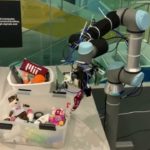
A busy commuter is ready to walk out the door, only to realize they’ve misplaced their keys and must search through piles of stuff to find them. Rapidly sifting through clutter, they wish they could figure out which pile was hiding the keys. Researchers at MIT have created a robotic system that can do just that. The system, RFusion, is a robotic arm with a camera and radio frequency (RF) antenna attached to its gripper. It fuses signals from...

Read More

Mathematicians solve an old geometry problem on...
Equiangular lines are lines in space that pass through a single point, and whose pairwise angles are all equal. Picture in 2D the three diagonals of a regular hexagon, and in 3D, the six lines connecting opposite vertices of a regular icosahedron (see the figure above). Mathematicians are not limited to three dimensions, however.  “In high dimensions, things really get interesting, and the possibilities can seem limitless,” says Yufei Zhao, assistant professor of mathematics. But they aren’t limitless, according...

Read More

Artificial intelligence is smart, but does it...
When it comes to games such as chess or Go, artificial intelligence (AI) programs have far surpassed the best players in the world. These “superhuman” AIs are unmatched competitors, but perhaps harder than competing against humans is collaborating with them. Can the same technology get along with people? In a new study, MIT Lincoln Laboratory researchers sought to find out how well humans could play the cooperative card game Hanabi with an advanced AI model trained to excel at...

Read More

 
New “risk triage” platform pinpoints compounding threats...
Over a 36-hour period in August, Hurricane Henri delivered record rainfall in New York City, where an aging storm-sewer system was not built to handle the deluge, resulting in street flooding. Meanwhile, an ongoing drought in California continued to overburden aquifers and extend statewide water restrictions. As climate change amplifies the frequency and intensity of extreme events in the United States and around the world, and the populations and economies they threaten grow and change, there is a critical...

Read More

Ana Pantelic appointed executive director of MIT...
MIT D-Lab recently welcomed new Executive Director Ana Pantelic to its team. Pantelic has worked at the confluence of systems change and social innovation and brings nearly 15 years of experience in policy and practice from Latin America, East Africa, and the Balkans. “As we prepare to enter our third decade, we are excited to have Ana on board to guide our vision and help implement our goal to deepen and broaden D-Lab’s impact at MIT and in the...

Read More

MIT economist Nancy Rose receives the Carolyn...
MIT economist Nancy L. Rose, the Charles P. Kindleberger Professor of Applied Economics, has been awarded the Carolyn Shaw Bell Award from the American Economic Association’s Committee on the Status of Women in the Economics Profession (CSWEP). The annual prize, named in honor of the late Wellesley College faculty member who was the first chair of CSWEP, recognizes an individual who has furthered the status of women in the economics profession through example, achievements, increasing our understanding of how...

Read More