Say WOW

Suborbital space tourism finally arrives | FCC prepares to run public C-band auction | The big four in the U.S. launch industry — United Launch Alliance, SpaceX, Blue Origin and Northrop Grumman — hope to be one of two providers that will receive five-year contracts later this year to launch national security payloads starting in 2022. | China’s launch rate stays high | The International Space Station is the largest ever crewed object in space.

 
The hub of the local robotics industry
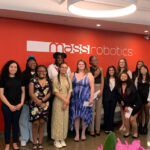
The MIT spinout Ori attracted a lot of attention when it unveiled its shapeshifting furniture prototypes in 2014. But after the founders left MIT, they faced a number of daunting challenges. Where would they find the space to build and demo their apartment-scale products? How would they get access to the machines and equipment necessary for prototyping? How would they decide on the control systems and software to run with their new furniture? Did anyone care about its innovations?...

Read More

Helping cassava farmers by extending crop life
The root vegetable cassava is a major food staple in dozens of countries across the world. Drought-resistant, nutritious, and tasty, it has also become a major source of income for small-scale, rural farmers in places like West Africa and Southeast Asia. But the utility of cassava has always been limited by its short postharvest shelf life of two to three days. That puts millions of farmers who rely on the crop in a difficult position. The farmers can’t plant...

Read More

New findings reveal how neurons build and...
The nervous system works because neurons communicate across connections called synapses. They “talk” when calcium ions flow through channels into “active zones” that are loaded with vesicles carrying molecular messages. The electrically charged calcium causes vesicles to “fuse” to the outer membrane of presynaptic neurons, releasing their communicative chemical cargo to the postsynaptic cell. In a new study, scientists at The Picower Institute for Learning and Memory at MIT provide several revelations about how neurons set up and sustain...

Read More

 
Community abounds as Sidney-Pacific Residence Hall celebrates...
The largest graduate residence on MIT’s campus, Sidney-Pacific (Building NW86), also known as Sid-Pac, thrives on the community its residents have built over the past 20 years. Opened in 2002, the residence hall celebrated its 20th anniversary this year with a reunion featuring cookouts, games, and alumni events. Located in the northwest corner of campus, Sid-Pac offers housing to nearly 750 graduate students from all over the world. The community prides itself on being inclusive, diverse, and a multicultural...

Read More

The best semiconductor of them all?
Silicon is one of the most abundant elements on Earth, and in its pure form the material has become the foundation of much of modern technology, from solar cells to computer chips. But silicon’s properties as a semiconductor are far from ideal. For one thing, although silicon lets electrons whizz through its structure easily, it is much less accommodating to “holes” — electrons’ positively charged counterparts — and harnessing both is important for some kinds of chips. What’s more,...

Read More

How different cancer cells respond to drug-delivering...
Using nanoparticles to deliver cancer drugs offers a way to hit tumors with large doses of drugs while avoiding the harmful side effects that often come with chemotherapy. However, so far, only a handful of nanoparticle-based cancer drugs have been FDA-approved. A new study from MIT and Broad Institute of MIT and Harvard researchers may help to overcome some of the obstacles to the development of nanoparticle-based drugs. The team’s analysis of the interactions between 35 different types of...

Read More

 
A new twist on old-school animation
It’s another case of a class project that turned into a bit more than the typical assignment.  The story began last fall in the MIT course 6.810 (Engineering Interactive Technologies) taught by Stefanie Mueller, an associate professor in MIT’s Department of Electrical Engineering and Computer Science. The students, who were mostly undergraduates, were asked to do a final group project, and they were assisted in this effort by graduate students who were helping Mueller teach the course.  Now, the...

Read More

Silk offers an alternative to some microplastics
Microplastics, tiny particles of plastic that are now found worldwide in the air, water, and soil, are increasingly recognized as a serious pollution threat, and have been found in the bloodstream of animals and people around the world. Some of these microplastics are intentionally added to a variety of products, including agricultural chemicals, paints, cosmetics, and detergents — amounting to an estimated 50,000 tons a year in the European Union alone, according to the European Chemicals Agency. The EU...

Read More

Fusion’s newest ambassador
When high school senior Tuba Balta emailed MIT Plasma Science and Fusion Center (PSFC) Director Dennis Whyte in February, she was not certain she would get a response. As part of her final semester at BASIS Charter School, in Washington, she had been searching unsuccessfully for someone to sponsor an internship in fusion energy, a topic that had recently begun to fascinate her because “it’s not figured out yet.” Time was running out if she was to include the internship as...

Read More

 
Four researchers with MIT ties earn Schmidt...
Four researchers with MIT ties — Juncal Arbelaiz, Xiangkun (Elvis) Cao, Sandya Subramanian, and Hannah Zlotnick ’17 — have been honored with competitive Schmidt Science Fellowships. Created in 2017, the fellows program aims to bring together the world’s brightest minds “to solve society’s toughest challenges.” The four MIT-affiliated researchers are among 29 Schmidt Science Fellows from around the world who will receive postdoctoral support for either one or two years with an annual stipend of $100,000, along with individualized...

Read More

Review: IT in health care has produced...
It has never been hard to imagine how information technology (IT) might improve health care services. Fast messaging replacing faxes. Electronic health records that can be accessed more easily. Software that can inform doctors’ decisions. Telemedicine that makes care more flexible. The possibilities seem endless. But as a new review paper from an MIT economist finds, the overall impact of information technology on health care has been evolutionary, not revolutionary. Technology has lowered costs and improved patient care —...

Read More

Donald “Bruce” Montgomery, influential electromagnet engineer, dies...
Donald “Bruce” Montgomery SM ’57, a highly influential engineer and longtime MIT researcher whose career was focused on the development of large-scale electromagnets, died on July 1. He was 89. Montgomery’s contributions have been pivotal for numerous major facilities in fusion energy, in the design of magnets for particle accelerators for physics and medical applications, for magnetically levitated transportation, and in many other disciplines. He was a recognized international leader in magnet design and fusion engineering, a member of...

Read More

 
Costis Daskalakis appointed inaugural Avanessians Professor in...
The MIT Stephen A. Schwarzman College of Computing has named Costis Daskalakis as the inaugural holder of the Avanessians Professorship. His chair began on July 1. Daskalakis is the first person appointed to this position generously endowed by Armen Avanessians ’81. Established in the MIT Schwarzman College of Computing, the new chair provides Daskalakis with additional support to pursue his research and develop his career. “I’m delighted to recognize Costis for his scholarship and extraordinary achievements with this distinguished...

Read More

Explained: Why perovskites could take solar cells...
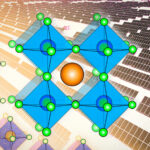
Perovskites hold promise for creating solar panels that could be easily deposited onto most surfaces, including flexible and textured ones. These materials would also be lightweight, cheap to produce, and as efficient as today’s leading photovoltaic materials, which are mainly silicon. They’re the subject of increasing research and investment, but companies looking to harness their potential do have to address some remaining hurdles before perovskite-based solar cells can be commercially competitive. The term perovskite refers not to a specific...

Read More

Physicists harness quantum “time reversal” to measure...
The quantum vibrations in atoms hold a miniature world of information. If scientists can accurately measure these atomic oscillations, and how they evolve over time, they can hone the precision of atomic clocks as well as quantum sensors, which are systems of atoms whose fluctuations can indicate the presence of dark matter, a passing gravitational wave, or even new, unexpected phenomena. A major hurdle in the path toward better quantum measurements is noise from the classical world, which can...

Read More