Say WOW

Suborbital space tourism finally arrives | FCC prepares to run public C-band auction | The big four in the U.S. launch industry — United Launch Alliance, SpaceX, Blue Origin and Northrop Grumman — hope to be one of two providers that will receive five-year contracts later this year to launch national security payloads starting in 2022. | China’s launch rate stays high | The International Space Station is the largest ever crewed object in space.

 
Deep learning with light
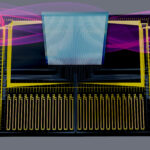
Ask a smart home device for the weather forecast, and it takes several seconds for the device to respond. One reason this latency occurs is because connected devices don’t have enough memory or power to store and run the enormous machine-learning models needed for the device to understand what a user is asking of it. The model is stored in a data center that may be hundreds of miles away, where the answer is computed and sent to the...
Read More

MIT engineers develop sensors for face masks...
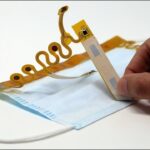
Wearing a mask can help prevent the spread of viruses such as SARS-CoV-2, but a mask’s effectiveness depends on how well it fits. Currently, there are no simple ways to measure the fit of a mask, but a new sensor developed at MIT could make it much easier to ensure a good fit. The sensor, which measures physical contact between the mask and the wearer’s face, can be applied to any kind of mask. Using this sensor, the researchers...

Read More

Reprogrammable materials selectively self-assemble
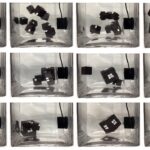
While automated manufacturing is ubiquitous today, it was once a nascent field birthed by inventors such as Oliver Evans, who is credited with creating the first fully automated industrial process, in flour mill he built and gradually automated in the late 1700s. The processes for creating automated structures or machines are still very top-down, requiring humans, factories, or robots to do the assembling and making.  However, the way nature does assembly is ubiquitously bottom-up; animals and plants are self-assembled...

Read More

 
“Drawing Together” is awarded Norman B. Leventhal...
“Drawing Together,” a social and ecological resilience project in New York City, has been awarded the 2022 Norman B. Leventhal City Prize.  The project is a collaboration between MIT faculty, researchers, and students, and Green City Force (GCF), a nonprofit organization in New York City that trains young people for careers with a sustainability focus while they serve local public housing communities. The winning proposal was submitted by a team led by MIT’s Miho Mazereeuw, associate professor and director...

Read More

Remarks by President-Elect Sally Kornbluth to the...
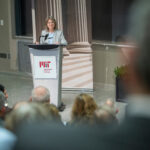
The following remarks were given by President-Elect Sally Kornbluth to a gathering of community members in room 10-250 on Thursday, Oct. 20. Thank you, Madam Chair, for the warm introduction. And thank you also for the careful and thorough way that you led the search process, and for the outstanding questions you and your colleagues posed. (It’s always a good sign when you leave a job interview wanting the job even more!) I was so impressed by John Jarve and...

Read More

Q&A: Melissa Nobles on guest-editing Nature to...
The venerable British journal Nature is publishing four special issues in 2022 that delve into matters of racism and science, including the way racist thinking has imbued the content of biological thinking, the downplaying of knowledge accumulated by non-Western societies, and the exclusion of people of color from the scientific establishment. MIT Chancellor Melissa Nobles is one of four guest editors of these issues, along with Elizabeth Wathuti, an environmental and climate activist from Kenya and founder of the...

Read More

 
Method for decoding asteroid interiors could help...
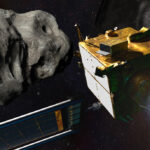
NASA hit a bullseye in late September with DART, the Double Asteroid Redirection Test, which flew a spacecraft straight at the heart of a nearby asteroid. The one-way kamikaze mission smashed into the stadium-sized space rock and successfully reset the asteroid’s orbit. DART was the first test of a planetary defense strategy, demonstrating that scientists could potentially deflect an asteroid headed for Earth. Now MIT researchers have a tool that may improve the aim of future asteroid-targeting missions. The...

Read More

Ad hoc committee releases report on remote...
The Ad Hoc Committee on Leveraging Best Practices from Remote Teaching for On-Campus Education has released a report that captures how instructors are weaving lessons learned from remote teaching into in-person classes. Despite the challenges imposed by teaching and learning remotely during the Covid-19 pandemic, the report says, “there were seeds planted then that, we hope, will bear fruit in the coming years.” “In the long run, one of the best things about having lived through our remote learning...

Read More

After a lifetime of blindness, newly sighted...
Humans are highly sensitive to the bodily movement of other people. Our ability to comprehend body language is crucial to our social thriving, providing information on emotion and behavioral predictions through subtle cues. When and how do we develop the ability to recognize human movement and distinguish it from other forms of movement? Newborns only 2 days old can tell apart random movement patterns and coordinated animal-like motion. But the ability to differentiate between the bodily movement of humans...

Read More

 
Five with MIT ties elected to the...
On October 17, the National Academy of Medicine announced the election of 100 new members to join their esteemed ranks. MIT faculty members Laura L. Kiessling ’83 and Mark Bear were among the new members, along with MIT alumni Krishna Shenoy SM ’92, PhD ’95 and David Tuveson ’87. Martin Burke, a former student in the Harvard-MIT Program in Health Sciences and Technology, was also elected. Election to the National Academy of Medicine is considered one of the highest...

Read More

Unlocking the mysteries of how neurons learn
When he matriculated in 2019 as a graduate student, Raúl Mojica Soto-Albors was no stranger to MIT. He’d spent time here on multiple occasions as an undergraduate at the University of Puerto Rico at Mayagüez, including eight months in 2018 as a displaced student after Hurricane Maria in 2017. Those experiences — including participating in the MIT Summer Research Bio Program (MSRP-Bio), which offers a funded summer research experience to underrepresented minorities and other underserved students — not only...

Read More

3 Questions: Blue hydrogen and the world’s...
In the past several years, hydrogen energy has increasingly become a more central aspect of the clean energy transition. Hydrogen can produce clean, on-demand energy that could complement variable renewable energy sources such as wind and solar power. That being said, pathways for deploying hydrogen at scale have yet to be fully explored. In particular, the optimal form of hydrogen production remains in question. MIT Energy Initiative Research Scientist Emre Gençer and researchers from a wide range of global...

Read More

 
The science of strength: How data analytics...
In the 1990s, if you suggested that the corner three-pointer was the best shot in basketball, you might have been laughed out of the gym. The game was still dominated largely by a fleet of seven-foot centers, most of whom couldn’t shoot from more than a few feet out from the basket. Even the game’s best player, Michael Jordan, was a mid-range specialist who averaged under two three-point attempts per game for his career. Fast forward to today, and...

Read More

Developing community around design
When the creation of the MIT Morningside Academy for Design (MAD) — a major interdisciplinary center housed in the MIT School of Architecture and Planning (SA+P) — was announced last spring, it promised to build on the Institute’s legendary leadership in design-focused education and provide a hub for cross-disciplinary design work across MIT. The 14 graduate students enrolled as MAD’s inaugural cohort of design fellows are making good on that promise with research projects supporting a range of efforts,...

Read More

Tackling social issues through engineering and theater
Susan Su thought she was discovering a new café. She was in Beijing for the second half of her gap year, working with a biomedical engineering group at Tsinghua University. But the lab was relatively new, and she was filling her time by exploring the city. She soon realized she had instead stumbled into the first nonprofit, independently owned theater in China, which supplemented its income with a café. Productions had been halted and staff had left due the...

Read More