Say WOW

Suborbital space tourism finally arrives | FCC prepares to run public C-band auction | The big four in the U.S. launch industry — United Launch Alliance, SpaceX, Blue Origin and Northrop Grumman — hope to be one of two providers that will receive five-year contracts later this year to launch national security payloads starting in 2022. | China’s launch rate stays high | The International Space Station is the largest ever crewed object in space.

 
New nanoparticles stimulate the immune system to...
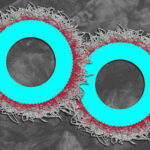
Cancer immunotherapy, which uses drugs that stimulate the body’s immune cells to attack tumors, is a promising approach to treating many types of cancer. However, it doesn’t work well for some tumors, including ovarian cancer. To elicit a better response, MIT researchers have designed new nanoparticles that can deliver an immune-stimulating molecule called IL-12 directly to ovarian tumors. When given along with immunotherapy drugs called checkpoint inhibitors, IL-12 helps the immune system launch an attack on cancer cells. Studying...
Read More

Using classic physical phenomena to solve new...
Quenching, a powerful heat transfer mechanism, is remarkably effective at transporting heat away. But in extreme environments, like nuclear power plants and aboard spaceships, a lot rides on the efficiency and speed of the process. It’s why Marco Graffiedi, a fifth-year doctoral student at MIT’s Department of Nuclear Science and Engineering (NSE), is researching the phenomenon to help develop the next generation of spaceships and nuclear plants. Growing up in small-town Italy Graffiedi’s parents encouraged a sense of exploration,...

Read More

Q&A: How MITHIC is fostering a culture...
The MIT Human Insight Collaborative (MITHIC) is a presidential initiative with a mission of elevating human-centered research and teaching and connecting scholars in the humanities, arts, and social sciences with colleagues across the Institute. Since its launch in 2024, MITHIC has funded 31 projects led by teaching and research staff representing 22 different units across MIT. The collaborative is holding its annual event on Nov. 17.  In this Q&A, Keeril Makan, associate dean in the MIT School of Humanities, Arts, and...

Read More

 
Study reveals the role of geography in...
The U.S. opioid crisis has varied in severity across the country, leading to extended debate about how and why it has spread. Now, a study co-authored by MIT economists sheds new light on these dynamics, examining the role that geography has played in the crisis. The results show how state-level policies inadvertently contributed to the rise of opioid addiction, and how addiction itself is a central driver of the long-term problem. The research analyzes data about people who moved...

Read More

Battery-powered appliances make it easy to switch...
As batteries have gotten cheaper and more powerful, they have enabled the electrification of everything from vehicles to lawn equipment, power tools, and scooters. But electrifying homes has been a slower process. That’s because switching from gas appliances often requires ripping out drywall, running new wires, and upgrading the electrical box. Now the startup Copper, founded by Sam Calisch SM ’14, PhD ’19, has developed a battery-equipped kitchen range that can plug into a standard 120-volt wall outlet. The induction range...

Read More

Injectable antenna could safely power deep-tissue medical...
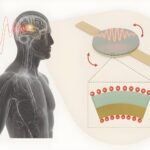
Researchers from the MIT Media Lab have developed an antenna — about the size of a fine grain of sand — that can be injected into the body to wirelessly power deep-tissue medical implants, such as pacemakers in cardiac patients and neuromodulators in people suffering from epilepsy or Parkinson’s disease. “This is the next major step in miniaturizing deep-tissue implants,” says Baju Joy, a PhD student in the Media Lab’s Nano-Cybernetic Biotrek research group. “It enables battery-free implants that...

Read More

 
Burning things to make things
Around 80 percent of global energy production today comes from the combustion of fossil fuels. Combustion, or the process of converting stored chemical energy into thermal energy through burning, is vital for a variety of common activities including electricity generation, transportation, and domestic uses like heating and cooking — but it also yields a host of environmental consequences, contributing to air pollution and greenhouse gas emissions. Sili Deng, the Doherty Chair in Ocean Utilization and associate professor of mechanical...

Read More

New method could improve manufacturing of gene-therapy...
Some of the most expensive drugs currently in use are gene therapies to treat specific diseases, and their high cost limits their availability for those who need them. Part of the reason for the cost is that the manufacturing process yields as much as 90 percent non-active material, and separating out these useless parts is slow, leads to significant losses, and is not well adapted to large-scale production. Separation accounts for almost 70 percent of the total gene therapy...

Read More

The joy of life (sciences)
For almost 30 years, Mary Gallagher has supported award-winning faculty members and their labs in the same way she tends the soil beneath her garden. In both, she pairs diligence and experience with a delight in the way that interconnected ecosystems contribute to the growth of a plant, or an idea, seeded in the right place. Gallagher, a senior administrative assistant in the Department of Biology, has spent much of her career at MIT. Her mastery in navigating the...

Read More

 
MIT students thrive in internships in the...
This summer, nine MIT students worked across the Middle East through the MISTI Arab World Program.  “At MISTI Arab World, the most impactful learning occurs when students venture beyond their comfort zones and experience the richness of a dynamic region,” says Maye Elqasem, program administrator of MISTI Arab World. “Our students return not only with new technical and professional capabilities, but also with a greater sense of self, resilience, and global awareness.”  Since it launched in 2014, more than...

Read More

MIT students stretch minds and bodies
We’ve known since ancient times that physical activity can prevent and treat a broad range of mental and physical illnesses. But today, exercise is not a central focus of modern health-care systems. Why? This is the motivating question behind MIT’s class STS.041/PE&W.0537 (Exercise is Medicine: From Ancient Civilizations to Modern Healthcare Systems) — a collaboration between the MIT Program in Science, Technology, and Society (STS) and the Department of Athletics, Physical Education, and Recreation (DAPER). Going beyond the MIT tradition of...

Read More

Professor Ioannis Yannas, pioneer of regenerative medicine...
Professor Ioannis V. Yannas SM ’59, a physical chemist and engineer known for the invention of artificial skin for the treatment of severe burns, and a longtime member of the MIT faculty, died on Oct. 19 at the age of 90. “Professor Yannas was a beloved and distinguished colleague, teacher, and mentor. The impact of his inventions, and his legacy on the field of bioengineering was immense,” says John Hart, the Class of 1922 Professor and head of the...

Read More

 
At MIT, a day of hands-on, kid-friendly...
Back and better than ever, the Cambridge Science Carnival, an annual free family-friendly science extravaganza, was held on Sunday, Sept. 21, at the Kendall/MIT Open Space. Founded by the MIT Museum in 2007, and organized with the support of MIT and the City of Cambridge, the 2025 event drew approximately 20,000 attendees and featured more than 140 activities, demonstrations, and installations tied to the topics of science, technology, engineering, arts, and mathematics (STEAM). Among the carnival’s wide variety of activities was the...

Read More

Startup’s tablets deliver cancer drugs more evenly...
Pills are by far the most convenient form of cancer treatment, but most oral cancer drugs quickly dissolve in the stomach, delivering a burst of chemicals into the bloodstream all at once. That can cause side effects. It also may limit the drug’s effectiveness because its concentration in the blood may become too low after the initial burst. Now, the startup Enzian Pharmaceutics, founded by Aron Blaesi PhD ’14 and former principal research scientist Nannaji Saka ScD ’74, is...

Read More

Five with MIT ties elected to National...
On Oct. 20 during its annual meeting, the National Academy of Medicine announced the election of 100 new members, including MIT faculty members Dina Katabi and Facundo Batista, along with three additional MIT alumni. Election to the National Academy of Medicine (NAM) is considered one of the highest honors in the fields of health and medicine, recognizing individuals who have demonstrated outstanding professional achievement and commitment to service. Facundo Batista is the associate director and scientific director of the...

Read More